


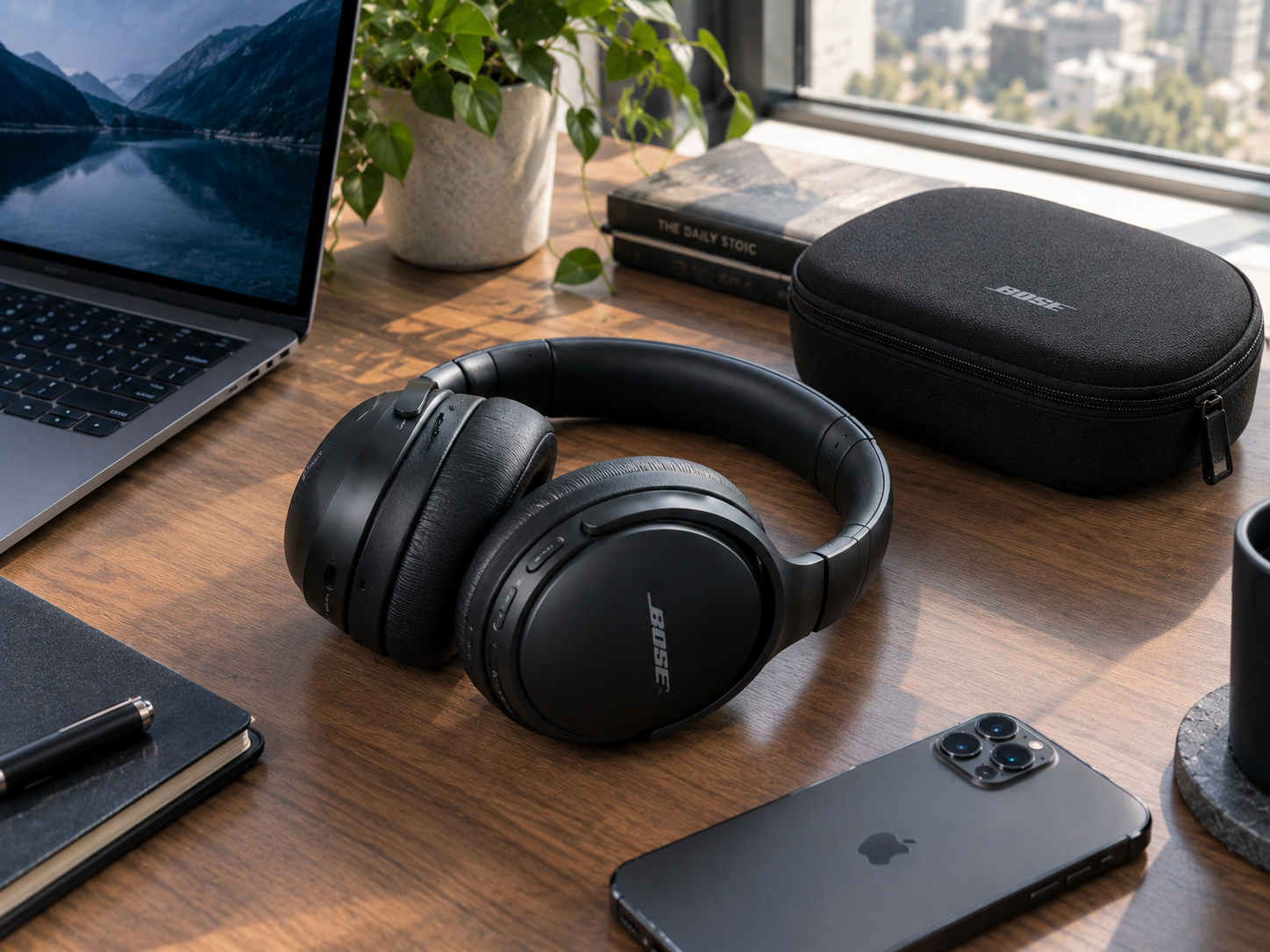
Bose headphones are known for combining active noise cancellation, comfortable over-ear designs and practical features for everyday listening. The current range includes the QuietComfort Headphones and the more advanced QuietComfort Ultra Headphones (2nd Gen), giving buyers different options for commuting, travel, work, music and video. Understanding the differences between these models can make the buying decision much easier.
What Makes Bose Headphones Popular?
The biggest attraction of Bose headphones is the combination of noise control and comfort. Rather than focusing only on audio output, Bose’s QuietComfort family is designed for extended listening in environments where outside noise can become distracting.
Active noise cancellation is particularly useful for repetitive background sounds such as aircraft engines, train noise and office equipment. Bose also provides Aware modes on its QuietComfort models, allowing users to hear more of their surroundings without taking the headphones off.
Comfort is another important consideration. Plush ear cushions and an over-ear design can make a significant difference during long flights or extended work sessions. The right fit still depends on individual head shape, glasses, and personal preferences, so specifications alone cannot determine comfort.
Bose Headphones: Current Models Explained
The current Bose lineup makes more sense when viewed according to the features you actually need.
The QuietComfort Headphones provide active noise cancellation, Quiet and Aware modes, adjustable EQ and up to 24 hours of battery life. Bose also lists Bluetooth multipoint connectivity, allowing compatible users to keep the headphones connected to two devices.
The QuietComfort Headphones (2nd Gen), introduced in August 2026, add Bose TrueSpatial Technology and three immersive listening modes: Still, Motion and Cinema. Bose announced the model with a refreshed industrial design and a $359 starting price in the US.
At the premium end, the QuietComfort Ultra Headphones (2nd Gen) add Bose Immersive Audio, CustomTune, advanced noise cancellation and Cinema Mode. They offer up to 30 hours of battery life, or up to 23 hours with Immersive Audio enabled.
| Model | Key features | Battery claim | Best suited to |
|---|---|---|---|
| QuietComfort Headphones | ANC, Aware Mode, EQ, multipoint | Up to 24 hours | Everyday listening |
| QuietComfort Headphones (2nd Gen) | ANC, TrueSpatial, Cinema mode | Up to 24 hours | Commuting and entertainment |
| QuietComfort Ultra (2nd Gen) | Advanced ANC, Immersive Audio, Cinema Mode, CustomTune | Up to 30 hours | Travel and premium listening |
Noise Cancellation and Listening Modes
Noise cancellation is one of the main reasons people consider Bose headphones.
Quiet mode is designed to provide strong noise cancellation, while Aware mode increases environmental awareness. The Ultra model also provides Immersion and Cinema modes, giving listeners additional ways to process audio. Bose says the Ultra’s Cinema mode uses spatialized audio to create a more theater-like presentation for video.
This flexibility matters because the ideal setting changes throughout the day. Someone working in a quiet room may prefer standard audio, while a traveller might want maximum noise reduction. During a conversation, Aware mode can be more practical than removing the headphones.
If you’re interested in how connected devices communicate with smartphones and other hardware, our guide to IoT technology and connected devices provides useful background on technologies such as Bluetooth and network connectivity.
Battery Life and Charging
Battery life varies between models and settings. The QuietComfort range offers up to 24 hours on a charge, while the QuietComfort Ultra Headphones (2nd Gen) can reach up to 30 hours with noise cancellation enabled and Immersive Audio turned off. Bose lists up to 23 hours when Immersive Audio is active.
That distinction is worth remembering when comparing advertised figures. Features that require additional processing can affect playback time.
The Ultra 2nd Gen also supports charging while in use through USB-C, according to Bose. A 15-minute charge can provide several additional hours of listening, depending on the selected settings.
💡 Pro Tip: If you travel frequently, compare battery life using the features you actually expect to use. A model’s maximum advertised runtime may not reflect your everyday setup if you regularly use immersive audio.
Sound, Immersive Audio and Cinema Mode
Standard stereo playback remains central to the Bose experience, but newer models put greater emphasis on spatialized sound.
Bose Immersive Audio is available on the Ultra range and newer QuietComfort models with TrueSpatial technology. Cinema Mode is designed specifically for video and can spatialize stereo content without requiring special movie formats or specially produced material.
For music listeners, immersive audio can make recordings feel more spacious. For films and television, the effect is intended to give dialogue and sound effects a more three-dimensional presentation.
However, immersive audio is a preference rather than a requirement. If you mainly listen to podcasts, make calls or want simple noise cancellation, a standard QuietComfort model may provide the features you actually need without paying for extras you rarely use.
Connectivity and Everyday Use
Modern headphones are part of a wider technology setup. People may switch between a smartphone, laptop, tablet and other devices throughout the day, making reliable connectivity important.
The current QuietComfort Headphones support Bluetooth multipoint, while the Ultra 2nd Gen also supports multipoint connections. Bose lists Bluetooth 5.4 on the Ultra 2nd Gen and a wireless range of up to 33 feet under its specifications.
Wired options can also matter. The Ultra 2nd Gen supports USB-C digital audio, including lossless audio from compatible sources, alongside a conventional audio connection. Bose says USB-C audio can also provide low-latency listening for compatible gaming setups.
For broader device compatibility, it can also help to understand the differences between major mobile ecosystems. Our iPhone vs Android comparison covers some of the wider hardware and software considerations that can affect accessory choices.
Which Bose Headphones Should You Choose?
The standard QuietComfort range makes sense for buyers who mainly want comfortable over-ear headphones, effective noise cancellation and straightforward everyday use.
The QuietComfort Headphones (2nd Gen) are more interesting for people who want newer immersive-audio capabilities without moving all the way to the Ultra range.
The QuietComfort Ultra Headphones (2nd Gen) are aimed at listeners who specifically want Bose’s more advanced features, including CustomTune, stronger noise-cancellation technology, Immersive Audio and Cinema Mode. Bose also positions them as its flagship over-ear noise-cancelling headphones.
📌 Key Takeaway: Choose Bose headphones according to your routine rather than the model name alone. Comfort, noise cancellation, battery life, connectivity and immersive features should all match how you actually listen.
Frequently Asked Questions
Are Bose headphones good for travel?
Yes. Their QuietComfort range is specifically designed around noise cancellation and comfortable over-ear listening, making these features useful for flights, trains and daily commuting.
Which Bose headphones have the longest battery life?
The QuietComfort Ultra Headphones (2nd Gen) currently offer up to 30 hours under Bose’s stated conditions, or up to 23 hours with Immersive Audio enabled.
Do Bose headphones support Bluetooth multipoint?
Yes. Bose lists multipoint Bluetooth connectivity on current QuietComfort models, allowing compatible headphones to maintain connections with two devices.
What is Bose Cinema Mode?
Cinema Mode uses Bose spatialized audio to give video a more theater-like presentation, with dialogue and effects positioned within a wider soundstage. It is available on the QuietComfort Ultra Headphones (2nd Gen) and newer compatible products.
Are Bose headphones suitable for work calls?
Yes. Current QuietComfort models include built-in microphones and call-focused features. However, microphone performance can vary with background noise, wind, device connections and the specific model, so frequent callers should consider those factors before buying.
Conclusion
Bose headphones offer a broad combination of comfort, noise cancellation, wireless connectivity and increasingly sophisticated immersive-audio features. The standard QuietComfort models suit straightforward everyday listening, while the Ultra 2nd Gen adds more advanced processing and connectivity options. Comparing the features you will actually use is the simplest way to find the right fit.
