


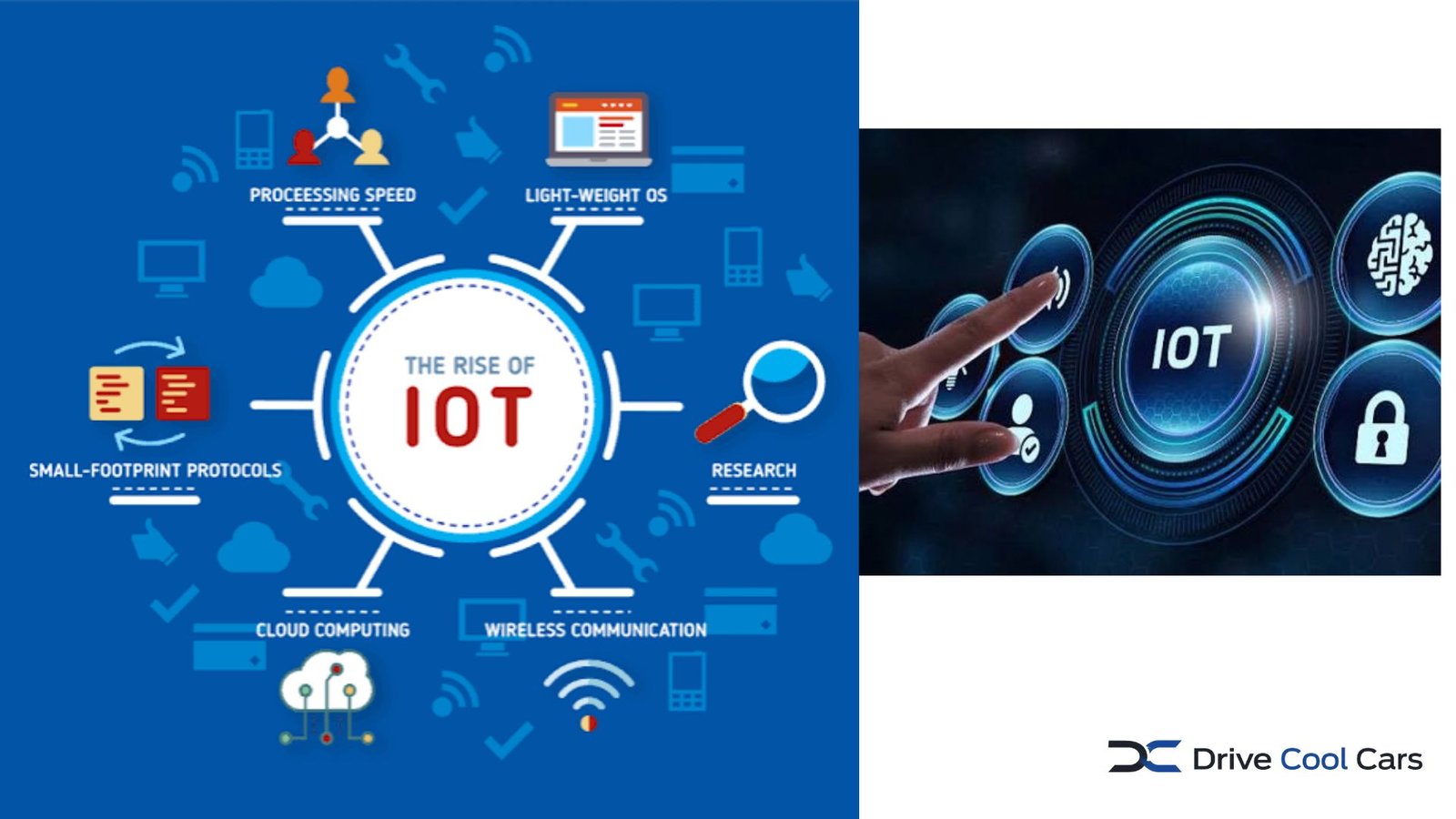
IoT technology connects physical objects to digital networks so they can collect, exchange, and sometimes act on data. From smart thermostats and wearable devices to connected vehicles and factory equipment, the Internet of Things brings computing into everyday physical environments. NIST describes IoT devices as having a way to interact with the physical world through a sensor or actuator and a network interface that connects them to digital systems.
The value is not simply that a device is connected. The real benefit comes from turning physical activity into useful information, analysing that information, and using the results to improve decisions, automate tasks, or monitor conditions.
What Is IoT Technology?
IoT technology is the combination of connected hardware, software, networking, data processing, and control mechanisms that allows physical devices to communicate with digital systems.
A typical IoT ecosystem can include:
- Sensors: Capture temperature, motion, pressure, location, energy use, or other conditions.
- Connectivity: Moves information through Wi-Fi, Bluetooth, cellular networks, Ethernet, or other communication technologies.
- Processing: Analyses information locally or through cloud-based systems.
- Applications: Present data to people or business systems through dashboards, mobile apps, or software.
- Actuators: Allow a system to respond physically, such as adjusting a valve, motor, lock, or thermostat.
NIST notes that IoT systems differ from conventional IT because they can directly interact with the physical world through sensors and actuators.
How IoT Technology Works
The process is easier to understand as a continuous flow rather than as a single device.
First, sensors observe something in the physical environment. A temperature sensor, for example, might measure the conditions inside a warehouse. The device then transmits that information across a network.
The data can be processed locally, sent to an edge gateway, or transferred to cloud infrastructure. Edge computing places processing closer to the devices generating the information, which can support faster responses and reduce the amount of data that needs to travel to cloud services.
Software then turns raw measurements into useful information. If a connected refrigeration system detects an unusual temperature pattern, an application could notify staff before stored products are affected.
That creates a basic IoT cycle:
Sense → Connect → Process → Analyse → Act
The sophistication of the system depends on the device, network, software, data requirements, and physical action involved.
Common Applications of IoT Technology
IoT technology is used across consumer, commercial, industrial, and public-sector environments.
| Sector | Example | Practical purpose |
|---|---|---|
| Smart homes | Thermostats, locks, lighting | Automation and remote control |
| Healthcare | Wearable and connected medical devices | Monitoring and data collection |
| Manufacturing | Machine sensors | Equipment monitoring and maintenance |
| Agriculture | Soil and environmental sensors | Resource and crop management |
| Transportation | Connected vehicles and tracking systems | Monitoring, navigation, and fleet management |
| Energy | Smart meters and grid equipment | Measuring and managing energy use |
NIST identifies examples ranging from wearable fitness trackers and smart televisions to connected cars and medical equipment, illustrating how broadly connected devices can interact with physical environments.
Smart Homes
Connected home devices can monitor conditions and respond to commands. A smart thermostat can use sensor information to control heating or cooling, while connected lighting systems can be managed through software.
The advantage is convenience, but household devices also create additional security and privacy considerations because they collect information and communicate over networks.
Industrial IoT
Factories can use connected sensors to monitor machinery, production conditions, energy consumption, and equipment performance. This can help organisations identify unusual operating patterns and make maintenance decisions based on current data rather than relying solely on fixed schedules.
NIST describes IoT as part of the convergence between information technology and operational technology, where data from physical systems can support analysis and changes in the physical environment.
Healthcare
Connected healthcare devices can collect and transmit information for monitoring and clinical workflows. The technology can support remote observation and data-driven services, although systems handling sensitive information require particularly careful security, privacy, reliability, and lifecycle management.
Benefits and Limitations
The benefits of IoT technology depend heavily on how well the entire system is designed. Connectivity alone does not guarantee useful results.
Potential benefits include:
- Real-time visibility into physical conditions
- Automation of repetitive tasks
- Remote monitoring and control
- More informed operational decisions
- Improved asset and equipment tracking
- Faster identification of unusual conditions
- Data that can support optimisation and planning
There are also limitations. Devices may have restricted processing power or battery capacity. Networks can fail, sensors can produce inaccurate readings, and organisations may struggle to manage large numbers of devices from different manufacturers.
Security is another major consideration. NIST highlights challenges associated with device management, patching, constrained resources, extensive connectivity, privacy, and interaction with the physical world.
💡 Pro Tip: Before deploying connected devices at scale, create an inventory showing each device, its owner, network connection, data collected, software-update method, and expected end-of-life date. This makes security and maintenance considerably easier to manage.
Security Considerations for Connected Devices
IoT security cannot be treated as an afterthought. A connected sensor may appear simple, but it can become part of a much larger technology ecosystem involving gateways, applications, cloud services, and business systems.
Useful safeguards include:
- Change default credentials and use strong authentication.
- Keep device software and firmware updated.
- Encrypt sensitive communications and stored information where appropriate.
- Segment IoT devices from critical systems when practical.
- Monitor devices for unusual behaviour.
- Define who can access collected data.
- Establish a process for replacing unsupported devices.
NIST recommends addressing cybersecurity throughout the IoT product lifecycle, including requirements, development, deployment, maintenance, customer support, and eventual retirement.
What Makes IoT Different From Traditional Devices?
A conventional device may perform a task without maintaining a continuous digital connection. An IoT device can sense its environment, communicate information, receive instructions, and participate in a broader system.
That difference makes IoT technology particularly useful where physical events need to be observed or controlled remotely. It also means the consequences of poor security can extend beyond stolen information. A compromised connected device could potentially affect physical processes, equipment, or services, depending on its role.
📌 Key Takeaway
IoT technology is best understood as an ecosystem rather than a collection of smart gadgets. Sensors gather information, networks move it, software processes it, and applications or actuators turn the resulting insight into action. Successful deployments therefore require attention to connectivity, data quality, security, device management, and the specific problem being solved.
Frequently Asked Questions
What is IoT technology in simple terms?
IoT technology allows physical objects to connect to digital systems so they can collect, share, and use data. A connected thermostat, vehicle sensor, industrial machine, or wearable device can gather information and communicate it to software for monitoring, analysis, automation, or control.
What are common examples of IoT devices?
Common examples include smart thermostats, fitness trackers, connected cars, smart appliances, industrial sensors, smart meters, security cameras, and certain medical devices. The specific capabilities vary, but an IoT device generally combines physical-world interaction with network connectivity.
Is IoT technology secure?
IoT security varies according to the device, software, network, manufacturer practices, and deployment environment. Connected products can introduce privacy and cybersecurity risks, particularly when organisations operate many devices that require updates and long-term management. Security should therefore be considered throughout the product and system lifecycle.
What is the difference between IoT and IIoT?
IoT is the broader concept of connected physical devices and systems. IIoT, or Industrial Internet of Things, refers specifically to connected technologies used in industrial environments such as manufacturing, energy, logistics, and infrastructure. IIoT deployments often place greater emphasis on operational continuity, safety, equipment performance, and integration with operational technology.
Why is edge computing useful for IoT?
Edge computing processes some data closer to where it is generated instead of sending everything to a distant cloud service. This can support quicker responses and reduce data-transfer requirements. It is particularly useful for applications where devices need timely local decisions or where connectivity to cloud infrastructure may be limited.
Conclusion
The importance of IoT technology comes from its ability to connect digital intelligence with the physical world. Its applications range from household automation to industrial monitoring and connected healthcare. For organisations considering an IoT project, the strongest starting point is a clearly defined operational problem, followed by careful decisions about sensors, connectivity, data, security, device management, and lifecycle support. A connected device is useful only when the information it produces can lead to meaningful action.
