


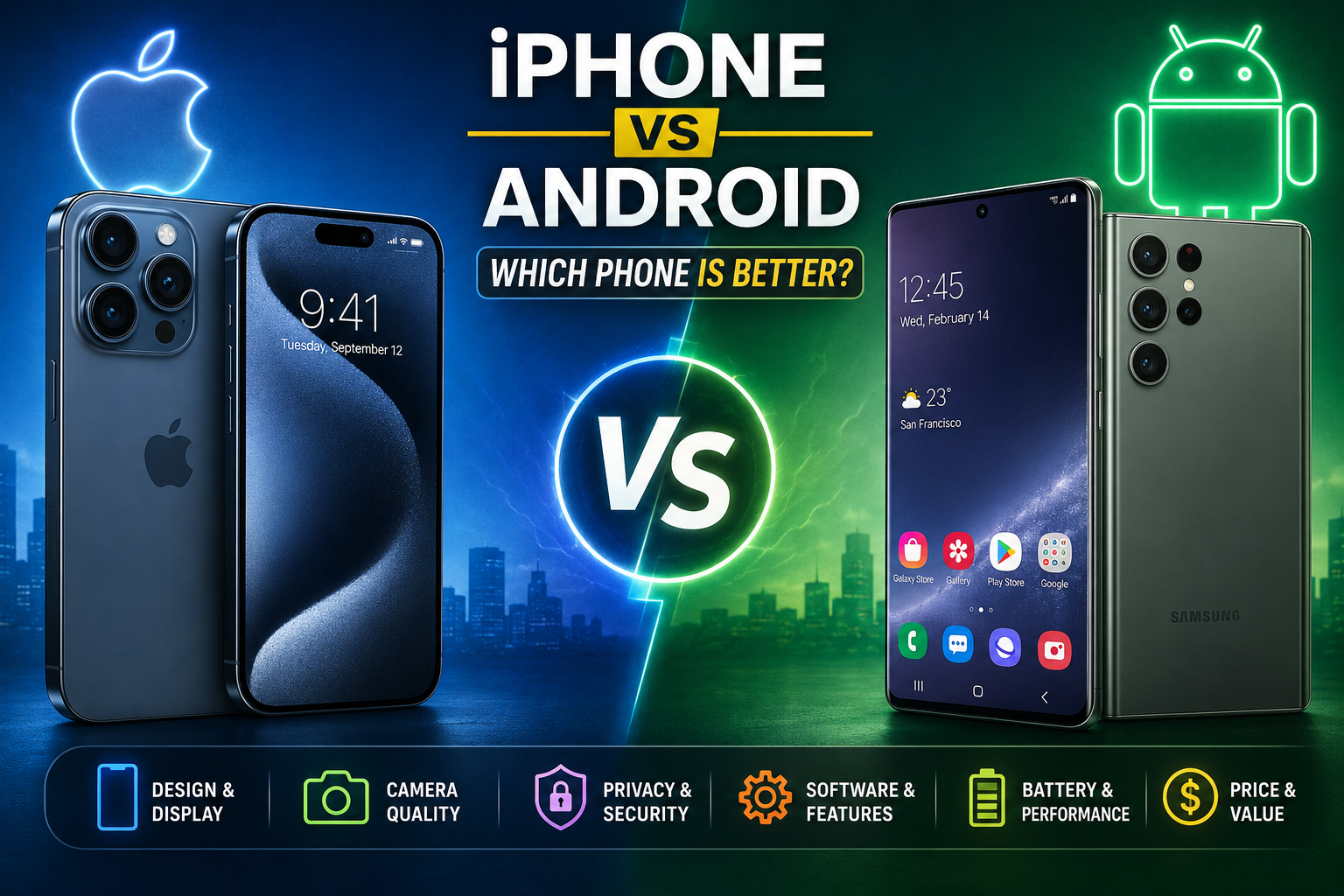
Choosing a new smartphone often comes down to two ecosystems: Apple’s iPhone and the many phones powered by Google’s Android. The iPhone vs Android debate is less about finding one universal winner and more about deciding which system fits your budget, habits, devices, and priorities. Both offer excellent cameras, fast processors, strong app libraries, modern security, and capable flagship models. The real differences appear in customization, device choice, software integration, messaging, accessories, and control.
iPhone vs Android: The Biggest Differences
iPhone offers a tightly controlled hardware-and-software experience, while Android gives shoppers a much wider range of phones. Apple makes the iPhone and iOS, whereas Android is used by manufacturers such as Samsung, Google, OnePlus, and others.
| Category | iPhone | Android |
|---|---|---|
| Device choice | Focused iPhone lineup | Wide range of brands and prices |
| Software | iOS | Android, with manufacturer interfaces |
| Customization | More controlled | Generally more flexible |
| Ecosystem | Strong Apple integration | Broad mix of brands and platforms |
| File and system control | Simpler, more managed | More user control on many devices |
| Budget range | Mostly mid-range to premium | Entry-level through ultra-premium |
| Messaging | iMessage plus SMS/RCS | Google Messages and other apps |
iPhone vs Android Hardware and Design Choice
Android has the clear advantage if you want variety. You can choose compact phones, large displays, foldables, camera-focused models, gaming phones, rugged devices, and lower-cost handsets. Google describes Android as an open platform that lets manufacturers tailor the experience to different hardware and customers.
iPhone is the stronger choice for someone who wants a more predictable hardware lineup. Apple controls the chip, operating system, camera processing, and many core parts of the experience. That integration helps the phone feel cohesive.
Software, Updates, and Longevity
Apple’s advantage in the iPhone vs Android discussion is its control over iOS and iPhone hardware, allowing it to manage updates directly. Android updates can vary by manufacturer and model, although many modern Android phones receive regular operating system and security updates. Some manufacturers now offer extended support.
Google’s Android platform includes features such as Private Space, theft detection, and stronger protection tools. Android 16 adds security and productivity improvements, including Identity Check and Advanced Protection.
For either platform, check the update policy for the exact phone you are buying rather than assuming all devices receive support for the same length of time.
Camera Quality: More Than Megapixels
The iPhone vs Android camera comparison is complicated because there is no single “Android camera.” Samsung, Google, and other manufacturers use different sensors, lenses, processing systems, and camera apps.
iPhones are known for consistent color, video performance, and close hardware-software integration. Android flagships can compete strongly, particularly in zoom, computational photography, low-light processing, and specialized shooting modes.
Look beyond megapixels and consider video quality, optical zoom, stabilization, skin tones, night photography, autofocus, and real-world samples.
💡 Pro Tip
If photography matters, compare sample photos and videos from the exact models you are considering. Camera performance can differ substantially between two phones at a similar price.
Privacy and Security
Both platforms have invested heavily in mobile security, but their approaches differ.
Apple emphasizes data minimization, on-device processing, hardware security, and privacy controls. Apple says many Apple Intelligence requests are processed on the device, while complex requests can use Private Cloud Compute with privacy protections.
Android also provides substantial security controls. Google highlights Play Protect, theft protection, scam detection, security updates, and permission controls. Users can manage how apps access information such as location and other personal data.
Apps, Messaging, and Ecosystem
The iPhone vs Android decision becomes easier if you already own other devices.
If you use a Mac, iPad, Apple Watch, or AirPods, an iPhone can make the overall experience more cohesive. Apple designs its devices and services to work closely together.
Android is more flexible. You can build an ecosystem around Samsung, Google, or another manufacturer, while also connecting Android devices with Windows and ChromeOS. Google highlights cross-device compatibility across different manufacturers and device types.
Messaging can also influence the decision. In the United States, iMessage remains a major part of the iPhone experience, while Android users commonly rely on Google Messages and RCS.
Which Is Better for Gaming?
High-end iPhones offer powerful chips and strong gaming performance. Premium Android phones can provide similarly serious hardware and may offer gaming-focused features such as high-refresh displays and additional cooling.
The iPhone vs Android choice for gaming depends heavily on the specific model. A premium phone from either side can be an excellent gaming device, while cheaper phones may compromise on graphics performance or sustained speed.
iPhone vs Android: Which One Should You Buy?
Choose an iPhone if you value:
- A consistent software experience
- Strong integration with Apple devices
- Straightforward device selection
- Privacy-focused features
- Tight hardware-software integration
Choose Android if you value:
- A broad range of prices and designs
- Greater customization
- Foldables and specialized hardware
- More choice among manufacturers
- Flexibility across ecosystems
The best smartphone is the one that fits the devices you already own and the way you actually use your phone.
📌 Key Takeaway
The iPhone vs Android decision is really a choice between two philosophies. iPhone emphasizes consistency and ecosystem integration, while Android emphasizes variety, customization, and freedom of hardware choice. Compare specific models, update policies, cameras, battery life, and compatibility before spending your money.
Frequently Asked Questions
Is iPhone better than Android?
Neither is automatically better. iPhone suits users who want a consistent interface and strong Apple ecosystem integration. Android appeals to shoppers seeking more device choices, customization, or specific hardware features. Your budget, existing devices, and priorities should decide.
Which lasts longer, iPhone or Android?
Longevity depends on the exact model and support policy. Apple controls iPhone hardware and iOS, while Android support varies by manufacturer. Before buying, check how long the specific phone is promised to receive operating system and security updates.
Is Android more customizable than iPhone?
Generally, yes. Android gives users more flexibility over layouts, widgets, default apps, and other interface elements. Google describes customization as a core part of Android’s design. iPhone also offers customization, but Apple keeps the system more controlled.
Which is better for privacy?
Both platforms offer strong privacy and security features. Apple emphasizes data minimization and on-device processing, while Android provides permission controls, malware protection, theft protection, and security updates.
Should I switch from iPhone to Android?
Switching makes sense if Android offers a feature you need, such as a particular camera system, foldable design, customization, or lower price. Staying with iPhone can make more sense if your workflow depends heavily on Apple devices and services.
Choosing the Right Phone
The iPhone vs Android argument becomes less useful when it turns into a brand rivalry. Both platforms are mature, capable, and secure when properly maintained. What matters is matching the phone to your priorities.
Look at the exact models within your budget, compare camera results, battery performance, software support, and ecosystem features, then choose the platform that creates fewer compromises in your daily routine. For one person, that will be an iPhone. For another, it will be Android—and both can be the right answer.
