


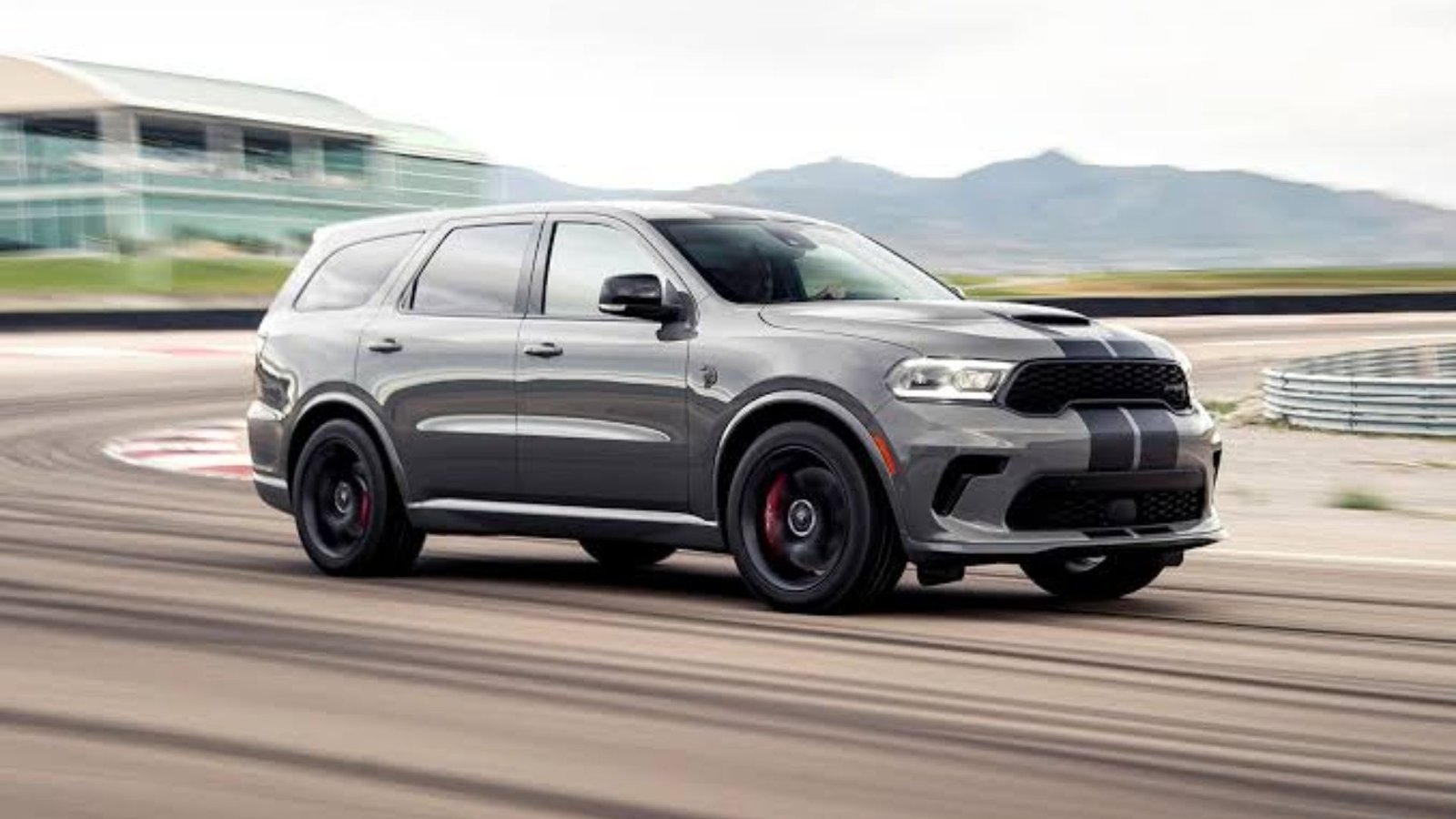
The Dodge Hellcat is famous for its supercharged V8 engine, incredible horsepower, and explosive acceleration. However, choosing the right model can be confusing because the Charger, Challenger, and Durango deliver different performance figures. If you want to know the real hellcat 0-60 times, comparing their engines, model years, and performance packages is essential. This guide breaks down the official acceleration claims, important specifications, and differences between Hellcat models so you can understand exactly what makes these vehicles so fast.
1. What Is the Hellcat 0-60 Time?
The hellcat 0-60 time measures how many seconds a Dodge Hellcat needs to accelerate from a complete stop to 60 miles per hour.
Most standard Dodge Challenger and Charger Hellcat models achieve approximately 3.6 seconds under ideal conditions. More powerful Redeye versions can deliver even quicker acceleration, while the Durango SRT Hellcat reaches 60 mph in an impressive 3.5 seconds.
Here is a quick overview:
| Dodge Hellcat model | 0-60 mph time | Horsepower |
|---|---|---|
| Challenger SRT Hellcat | 3.6 seconds | 717 hp |
| Challenger SRT Hellcat Redeye | 3.4–3.6 seconds | 797 hp |
| Challenger SRT Super Stock | 3.25 seconds | 807 hp |
| Charger SRT Hellcat | 3.6 seconds | 707 hp |
| Charger SRT Hellcat Redeye | 3.6 seconds | 797 hp |
| Durango SRT Hellcat | 3.5 seconds | 710 hp |
Note: These figures represent published manufacturer performance claims or model-specific performance references, not guaranteed results for every vehicle. Equipment, tires, surface conditions, and testing methods can change acceleration times.
The biggest difference comes from the engine configuration, tire grip, vehicle weight, and transmission.
2. Dodge Challenger Hellcat 0-60 Time
The Dodge Challenger SRT Hellcat is one of the most recognizable American muscle cars. Its supercharged 6.2-liter HEMI V8 engine produces 717 horsepower and 656 lb-ft of torque in the standard configuration.
The challenger hellcat 0-60 time is approximately 3.6 seconds with the automatic transmission under ideal conditions.
Dodge combines a powerful engine with rear-wheel drive, an advanced eight-speed automatic transmission, and performance-focused traction systems. The result is rapid acceleration with the unmistakable sound of a supercharged HEMI engine.
Dodge Challenger Hellcat specifications
| Specification | Details |
|---|---|
| Engine | Supercharged 6.2L HEMI V8 |
| Horsepower | 717 hp |
| Torque | 656 lb-ft |
| Transmission | 8-speed automatic or 6-speed manual |
| Drivetrain | Rear-wheel drive |
| 0-60 mph | Approximately 3.6 seconds |
| Body style | Two-door coupe |
| Fuel type | Premium gasoline recommended |
Why is the Challenger Hellcat so fast?
Three important features contribute to its acceleration:
- Supercharged V8 engine: Produces strong power and torque across the rev range.
- Performance transmission: The automatic transmission delivers quick, consistent gear changes.
- Launch technology: Available launch-control features help manage wheelspin and acceleration.
The Challenger also offers Widebody configurations with wider tires. These improve the contact area with the road and help the vehicle put its power down.
3. Dodge Charger Hellcat 0-60 Time
The Dodge Charger SRT Hellcat brings supercharged muscle-car performance to a practical four-door sedan. It combines a powerful V8 engine with additional passenger space, making it different from the two-door Challenger.
The charger hellcat 0-60 time is approximately 3.6 seconds for the standard model.
The Charger SRT Hellcat uses a supercharged 6.2-liter HEMI V8. Depending on the model year and configuration, its horsepower rating ranges from 707 hp in earlier standard versions to 797 hp in the Redeye.
Dodge Charger Hellcat specifications
| Specification | Details |
|---|---|
| Engine | Supercharged 6.2L HEMI V8 |
| Standard horsepower | 707 hp |
| Redeye horsepower | 797 hp |
| Standard torque | 650 lb-ft |
| Redeye torque | 707 lb-ft |
| Transmission | 8-speed automatic |
| Drivetrain | Rear-wheel drive |
| 0-60 mph | Approximately 3.6 seconds |
| Body style | Four-door sedan |
| Seating capacity | Five passengers |
What makes the Charger Hellcat special?
The Charger offers an unusual combination of acceleration and everyday usability.
Its main advantages include:
- Four-door passenger access.
- Strong highway acceleration.
- A supercharged V8 engine.
- Available Widebody configuration.
- Performance braking systems.
- A spacious cabin compared with traditional two-door muscle cars.
The dodge charger hellcat 0-60 time makes it especially impressive for a full-size performance sedan.
4. Dodge Durango SRT Hellcat 0-60 Time
The Dodge Durango SRT Hellcat proves that extreme acceleration is not limited to sports cars. This high-performance SUV uses the same supercharged 6.2-liter HEMI V8 engine family and delivers 710 horsepower with 645 lb-ft of torque.
The official durango hellcat 0-60 time is 3.5 seconds.
That is an impressive result for a large SUV with three rows of seating. Dodge also reports an NHRA-certified quarter-mile time of 11.5 seconds and a top speed of 180 mph for the Durango SRT Hellcat.
Dodge Durango SRT Hellcat specifications
| Specification | Details |
|---|---|
| Engine | Supercharged 6.2L HEMI V8 |
| Horsepower | 710 hp |
| Torque | 645 lb-ft |
| Transmission | TorqueFlite 8-speed automatic |
| Drivetrain | All-wheel drive |
| 0-60 mph | 3.5 seconds |
| Quarter-mile | 11.5 seconds |
| Top speed | 180 mph |
| Seating capacity | Up to seven |
| Body style | Performance SUV |
Why is the Durango Hellcat so impressive?
The Durango combines several capabilities in one vehicle:
- Supercharged V8 performance.
- Three-row passenger seating.
- All-wheel-drive traction.
- High-performance braking.
- Impressive towing capability.
- Everyday SUV practicality.
Unlike the rear-wheel-drive Charger and Challenger, its all-wheel-drive system helps distribute engine power across all four wheels.
This makes the dodge durango srt hellcat 0-60 performance especially impressive considering the SUV’s size and weight.
5. Hellcat 0-60 Times by Model Year (2015–2023)
One of the most common questions among Dodge enthusiasts concerns the difference between older and newer Hellcat models.
The original Hellcat arrived for the 2015 model year. Dodge continued developing the platform, introducing more powerful Redeye versions, Widebody configurations, and special performance editions.
However, a model-year comparison needs an important distinction: Dodge did not publish a separate, directly comparable 0-60 test result for every model-year and trim combination. The following table separates established specifications from approximate performance references.
Model-year comparison table
| Model year | Vehicle | Horsepower | 0-60 mph reference |
|---|---|---|---|
| 2015 | Challenger SRT Hellcat | 707 hp | Approx. 3.6 sec |
| 2016 | Challenger SRT Hellcat | 707 hp | Approx. 3.6 sec |
| 2017 | Challenger SRT Hellcat | 707 hp | Approx. 3.6 sec |
| 2018 | Challenger SRT Hellcat | 707 hp | Approx. 3.6 sec |
| 2019 | Challenger SRT Hellcat | 717 hp | Approx. 3.6 sec |
| 2020 | Challenger SRT Hellcat | 717 hp | Approx. 3.6 sec |
| 2021 | Challenger SRT Hellcat | 717 hp | Approx. 3.6 sec |
| 2022 | Challenger SRT Hellcat | 717 hp | Approx. 3.6 sec |
| 2023 | Challenger SRT Hellcat | 717 hp | Approx. 3.6 sec |
| 2023 | Challenger SRT Hellcat Redeye | 797 hp | Approx. 3.4–3.6 sec |
| 2023 | Challenger SRT Super Stock | 807 hp | 3.25 sec |
These are reference figures, not a verified set of independent tests for every model year. Special editions, transmissions, and tire configurations can produce different results.
2015 Hellcat 0-60
The 2015 Challenger SRT Hellcat introduced the original 707-horsepower supercharged HEMI V8 configuration.
Its acceleration was approximately 3.6 seconds from 0 to 60 mph with the automatic transmission under favorable conditions.
The 2015 model established the foundation for the modern Hellcat performance lineup.
2016 Hellcat 0-60
The 2016 Hellcat continued with the original 707-horsepower supercharged engine.
Its acceleration remained around the same 3.6-second performance benchmark. Buyers could choose between the six-speed manual and eight-speed automatic transmissions.
The biggest attraction was its combination of classic muscle-car styling and modern supercharged performance.
2018 Hellcat 0-60
The 2018 model year brought important developments to the Challenger lineup, including the introduction of the wider-body Hellcat configuration.
The standard Hellcat retained its 707-horsepower engine, while the Widebody offered wider tires and additional grip.
The 2018 hellcat 0-60 performance depends on the specific configuration, transmission, and road conditions.
2019 Hellcat 0-60
The 2019 Challenger Hellcat lineup offered more choices, including the standard Hellcat and the more powerful Redeye.
The standard Hellcat produced 717 horsepower, while the Redeye delivered 797 horsepower.
The Redeye also introduced additional performance hardware, making it a more aggressive option for acceleration enthusiasts.
2020 Hellcat 0-60
The 2020 Challenger continued the Hellcat and Redeye performance options.
The standard Hellcat produced 717 horsepower, while the Redeye offered 797 horsepower. The Super Stock configuration would arrive for the 2020 model-year performance lineup with 807 horsepower.
The 2020 hellcat 0-60 result therefore depends heavily on which version you are comparing.
2023 Hellcat 0-60
The 2023 model year marked the final production year of the traditional Dodge Challenger generation.
Dodge offered several powerful configurations, including the Hellcat, Redeye, Jailbreak, and Super Stock.
The most powerful versions reached impressive acceleration figures, with the Super Stock officially rated at 3.25 seconds from 0 to 60 mph.
The 2023 hellcat 0-60 comparison is especially interesting because it includes multiple power levels rather than one standard performance specification.
6. Hellcat vs. Hellcat Redeye vs. Super Stock
These three names represent different performance levels within the Challenger Hellcat family.
Although they share the same basic supercharged HEMI architecture, their power output and supporting equipment differ.
| Feature | Hellcat | Hellcat Redeye | Super Stock |
|---|---|---|---|
| Engine | 6.2L supercharged V8 | 6.2L high-output V8 | 6.2L high-output V8 |
| Horsepower | 717 hp | 797 hp | 807 hp |
| Torque | 656 lb-ft | 707 lb-ft | 707 lb-ft |
| 0-60 mph | Approx. 3.6 sec | Approx. 3.4–3.6 sec | 3.25 sec |
| Transmission | Manual/automatic availability | 8-speed automatic | 8-speed automatic |
| Main purpose | High-performance street car | Higher-output performance | Drag-focused performance |
Standard Hellcat
The standard Hellcat offers an excellent balance of power, acceleration, and traditional muscle-car character.
Its 717 horsepower provides more than enough performance for enthusiasts who want a powerful street-oriented vehicle.
Hellcat Redeye
The Redeye takes performance further with 797 horsepower and 707 lb-ft of torque.
It features a high-output engine setup and additional performance-focused equipment.
Hellcat Super Stock
The Super Stock pushes the platform further with 807 horsepower and specialized drag-racing equipment.
Dodge advertises a 3.25-second 0-60 mph time for this model.
Its performance-focused tires, suspension setup, and launch technology help it deliver quicker acceleration.
7. What Makes the Hellcat Engine So Powerful?
The heart of every traditional Hellcat is the supercharged 6.2-liter HEMI V8 engine.
This engine uses a supercharger to force additional air into the combustion chambers. More available oxygen allows the engine to burn more fuel and generate greater power.
Several engineering features contribute to its performance.
Supercharged induction
The supercharger compresses incoming air before it enters the engine.
This allows the V8 to produce considerably more power than a naturally aspirated engine of similar displacement.
High-performance cooling
Supercharged engines generate substantial heat during demanding driving.
Dodge incorporates specialized cooling systems to help control intake temperatures and maintain engine performance.
High torque production
The Hellcat generates substantial torque, helping it accelerate quickly from a standstill and continue pulling strongly at higher speeds.
Advanced transmission
The eight-speed TorqueFlite automatic transmission helps deliver power efficiently through rapid gear changes.
Performance electronics
Dodge incorporates several electronic systems designed to improve acceleration and traction.
These include:
- Launch Control.
- Launch Assist.
- Electronic stability control.
- Performance drive modes.
- Traction management systems.
Together, these components help explain why the srt hellcat 0-60 performance remains impressive across several different Dodge vehicles.
8. What Factors Affect Hellcat 0-60 Acceleration?
A manufacturer’s acceleration figure does not guarantee the same result in every situation.
Several factors influence how quickly a Hellcat reaches 60 mph.
| Factor | Effect on acceleration |
|---|---|
| Tire condition | Worn tires reduce available grip |
| Road surface | Smooth, dry pavement generally improves traction |
| Weather | Temperature and moisture affect tire grip and engine cooling |
| Vehicle weight | Additional weight increases acceleration demands |
| Transmission | Gear ratios and shift behavior influence performance |
| Tire pressure | Incorrect pressure can affect the contact patch |
| Engine temperature | Excessive heat can reduce performance |
| Fuel quality | Incorrect fuel can affect engine operation |
Tires and traction
The Hellcat produces substantial torque, which makes traction extremely important.
Even a powerful engine cannot deliver its full acceleration potential if the tires cannot maintain grip.
Weather conditions
Cold tires, wet roads, and extreme temperatures can affect acceleration.
Hot conditions can also increase heat-management demands on the supercharger system.
Vehicle maintenance
Regular maintenance helps preserve the vehicle’s original performance.
Important areas include:
- Engine oil condition.
- Spark plugs.
- Air filters.
- Cooling system.
- Tire condition.
- Transmission servicing.
- Brake system condition.
A well-maintained vehicle is more likely to deliver consistent performance than one with neglected components.
9. Which Hellcat Is the Fastest?
The answer depends on whether you are comparing the standard Charger, Challenger, Durango, or specialized Challenger performance editions.
For the figures covered in this guide, the Challenger SRT Super Stock holds the quickest published 0-60 mph claim at 3.25 seconds.
The Durango SRT Hellcat is also remarkable because it reaches 60 mph in 3.5 seconds despite being a large three-row SUV.
Performance ranking
| Rank | Model | 0-60 mph |
|---|---|---|
| 1 | Challenger SRT Super Stock | 3.25 sec |
| 2 | Challenger SRT Hellcat Redeye | Approx. 3.4–3.6 sec |
| 3 | Durango SRT Hellcat | 3.5 sec |
| 4 | Charger SRT Hellcat | Approx. 3.6 sec |
| 5 | Challenger SRT Hellcat | Approx. 3.6 sec |
The rankings overlap because the Redeye, Durango, and standard Hellcat figures come from different configurations and testing conditions. They should not be treated as a controlled head-to-head test.
10. Dodge Charger vs. Challenger vs. Durango Hellcat
Choosing between these three vehicles is about more than acceleration.
Each model offers a different driving experience and serves a different purpose.
| Category | Challenger Hellcat | Charger Hellcat | Durango Hellcat |
|---|---|---|---|
| Body style | Coupe | Sedan | SUV |
| Engine | 6.2L supercharged V8 | 6.2L supercharged V8 | 6.2L supercharged V8 |
| Horsepower | 717 hp | 707 hp | 710 hp |
| Drivetrain | RWD | RWD | AWD |
| 0-60 mph | Approx. 3.6 sec | Approx. 3.6 sec | 3.5 sec |
| Seating | 5 | 5 | Up to 7 |
| Main advantage | Muscle-car character | Four-door practicality | Family space and acceleration |
Choose the Challenger if:
- You prefer traditional two-door muscle-car styling.
- You want a powerful rear-wheel-drive coupe.
- You enjoy having several performance configurations.
- You want access to specialized drag-focused versions.
Choose the Charger if:
- You need four doors.
- You want a powerful performance sedan.
- Passenger access matters.
- You want muscle-car acceleration with additional practicality.
Choose the Durango if:
- You need three rows of seating.
- You prefer all-wheel drive.
- You want SUV practicality.
- You need towing capability alongside powerful acceleration.
For many enthusiasts, the Challenger is the traditional muscle-car choice, while the Charger offers a practical sedan alternative and the Durango provides an unusual combination of SUV utility and supercharged performance.
11. Is the Hellcat Faster Than Other Muscle Cars?
The Hellcat competes with several well-known American performance vehicles.
Its supercharged engine gives it a strong acceleration advantage in many comparisons, although results depend on the exact model and testing conditions.
| Vehicle | Engine | Horsepower | General performance character |
|---|---|---|---|
| Dodge Challenger Hellcat | Supercharged 6.2L V8 | 717 hp | High-power muscle coupe |
| Chevrolet Camaro ZL1 | Supercharged 6.2L V8 | 650 hp | Track-focused muscle car |
| Ford Mustang Shelby GT500 | Supercharged 5.2L V8 | 760 hp | High-performance sports coupe |
| Dodge Charger Hellcat Redeye | Supercharged 6.2L V8 | 797 hp | High-power muscle sedan |
| Dodge Challenger Super Stock | Supercharged 6.2L V8 | 807 hp | Drag-focused muscle car |
These vehicles approach performance differently.
The Chevrolet Camaro ZL1 emphasizes track handling, while the Ford Mustang Shelby GT500 combines a powerful engine with advanced performance engineering.
Dodge focuses heavily on supercharged V8 power and straight-line acceleration.
A fair comparison should consider more than the 0-60 figure. Quarter-mile times, braking, handling, tire setup, and repeatability also matter.
12. How Can You Get Consistent Hellcat Acceleration Results?
Getting a repeatable acceleration result requires a suitable vehicle condition and controlled testing environment.
The following considerations help explain differences between published figures and real-world measurements:
- Use tires in good condition.
- Maintain the manufacturer’s recommended tire pressures.
- Keep the cooling system properly serviced.
- Use the fuel grade specified in the owner’s manual.
- Check that the vehicle has no warning lights or mechanical problems.
- Compare results using the same timing method.
- Account for road conditions and weather.
For safety, acceleration testing should take place only on a properly controlled track or closed course.
Public roads are not suitable for attempting maximum-acceleration runs.
13. Is the Dodge Hellcat Worth Buying?
The Dodge Hellcat remains an attractive option for enthusiasts who want serious V8 performance.
However, buying one requires considering more than horsepower and acceleration.
Advantages
- Powerful supercharged V8 engine.
- Impressive straight-line acceleration.
- Distinctive muscle-car styling.
- Strong aftermarket support.
- Multiple performance configurations.
- Excellent enthusiast appeal.
Disadvantages
- Higher fuel consumption.
- Expensive tires and maintenance.
- High insurance costs.
- Significant heat production during demanding driving.
- Rear-wheel-drive models require careful traction management.
Before purchasing a used Hellcat, check its service history, engine condition, transmission operation, cooling system, tire wear, and evidence of previous modifications.
A professional pre-purchase inspection can help identify expensive problems.
14. Frequently Asked Questions About Hellcat 0-60
1. What is the Dodge Hellcat 0-60 time?
Answer: Most standard Dodge Challenger and Charger Hellcat models achieve approximately 3.6 seconds from 0 to 60 mph. The Durango SRT Hellcat achieves 3.5 seconds, while the Challenger Super Stock is rated at 3.25 seconds.
2. How fast is the 2015 Hellcat 0-60?
Answer: The 2015 Dodge Challenger SRT Hellcat has an approximate 0-60 mph time of 3.6 seconds with the automatic transmission under ideal conditions. It produces 707 horsepower from its supercharged 6.2-liter HEMI V8.
3. What is the 2020 Hellcat 0-60 time?
Answer: The standard 2020 Challenger Hellcat has an approximate 3.6-second acceleration benchmark. However, the Redeye and other performance configurations offer different acceleration capabilities.
4. Is the Dodge Charger Hellcat faster than the Challenger Hellcat?
Answer: Both standard models have approximately 3.6-second 0-60 mph performance figures. Their actual acceleration depends on transmission, tires, equipment, and testing conditions.
5. What is the Durango SRT Hellcat 0-60 time?
Answer: The Dodge Durango SRT Hellcat accelerates from 0 to 60 mph in an officially advertised 3.5 seconds. It produces 710 horsepower and 645 lb-ft of torque from its supercharged 6.2-liter HEMI V8.
6. Which Dodge Hellcat has the quickest 0-60 time?
Answer: The Dodge Challenger SRT Super Stock has a published 0-60 mph time of 3.25 seconds. Its 807-horsepower engine and specialized drag-racing equipment make it one of the quickest Hellcat-family models.
Conclusion: Which Hellcat Delivers the Best Acceleration?
The Dodge Hellcat family offers some of the most exciting supercharged V8 performance available in American muscle vehicles.
The standard Challenger and Charger deliver approximately 3.6-second acceleration, while the Durango SRT Hellcat achieves an impressive 3.5 seconds. For enthusiasts looking for even quicker performance, the Challenger Redeye and Super Stock offer higher horsepower and more specialized equipment.
Understanding the hellcat 0-60 figures helps you compare different models, identify the right performance package, and make a more informed buying decision.
Whether you prefer the Challenger’s classic coupe styling, the Charger’s four-door practicality, or the Durango’s powerful SUV design, Dodge offers a Hellcat experience for different driving preferences.
