


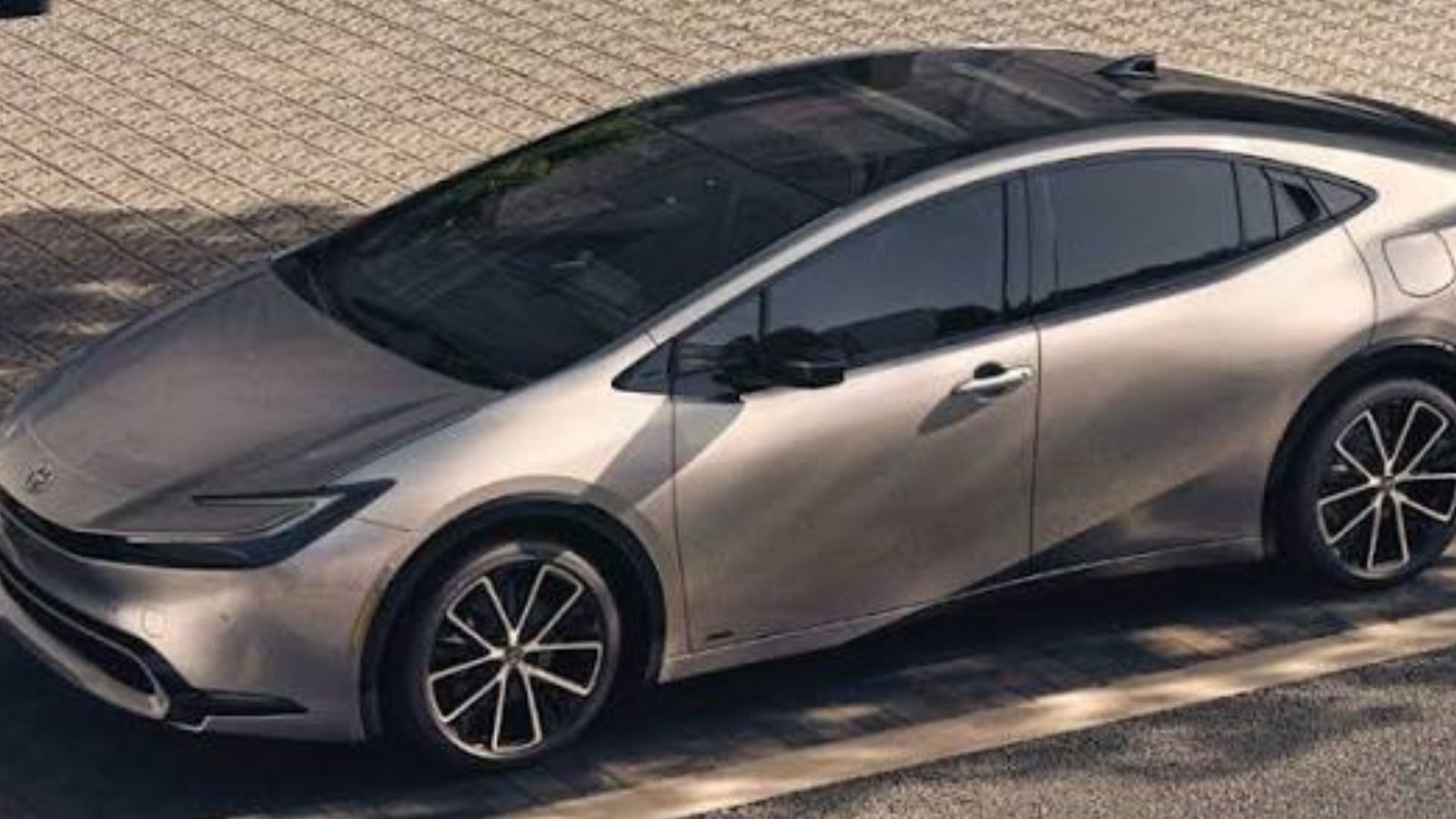
Buying a fuel-efficient car should save money, not force you to sacrifice comfort or performance. Yet rising vehicle prices and confusing hybrid options make choosing the right model difficult. The Toyota Prius 2025 offers an impressive solution with up to 57 MPG, modern technology, sporty styling, and available all-wheel drive. But is its price justified, and which trim delivers the best value?
1. What Is the Toyota Prius 2025, and Is It a Good Car?
Quick Answer: The Toyota Prius 2025 is a five-seat hybrid hatchback that combines a gasoline engine with electric motors. It offers up to 57 MPG combined, as much as 196 horsepower, and advanced safety technology.
Toyota designed the fifth-generation Prius for people who want excellent fuel economy without driving a slow or outdated-looking vehicle.
Its low roofline, sharp headlights, wide stance, and smooth body give it a sportier appearance than earlier generations. The hybrid system also delivers noticeably stronger acceleration than the older Prius models.
The main advantages include:
- Excellent fuel economy for everyday driving.
- No external charging required for the standard hybrid.
- Available electronic all-wheel drive.
- Standard wireless Apple CarPlay and Android Auto.
- Advanced driver-assistance features across all trims.
- A choice of affordable, comfortable, and premium grades.
However, the sloping roof reduces rear-seat headroom, and the low seating position may not suit every driver.
Verdict: It is a strong choice for commuters, small families, and drivers who value fuel savings. Buyers needing a spacious rear seat or a tall cargo area should also consider other vehicles.
2. Toyota Prius 2025 Specifications at a Glance
Here is a detailed specification table covering the standard U.S.-market hybrid.
| Specification | 2025 Prius Details |
|---|---|
| Manufacturer | Toyota Motor Corporation |
| Model year | 2025 |
| Vehicle type | Five-door hybrid hatchback |
| Seating capacity | 5 passengers |
| Gasoline engine | 2.0-liter, four-cylinder |
| Hybrid system | Fifth-generation Toyota Hybrid System |
| Combined power (FWD) | 194 hp |
| Combined power (AWD) | 196 hp |
| Transmission | Electronically controlled continuously variable transmission (eCVT) |
| Drivetrain | Front-wheel drive or available AWD |
| Hybrid battery | Lithium-ion |
| Maximum combined fuel economy | 57 MPG |
| AWD fuel economy | Up to 54 MPG combined |
| Acceleration, 0–60 mph | Approximately 7.2 seconds FWD; 7.0 seconds AWD, Toyota estimates |
| Wheels | 17-inch or 19-inch |
| Infotainment screen | 8-inch or 12.3-inch |
| Digital instrument display | 7-inch |
| Smartphone connectivity | Wireless Apple CarPlay and Android Auto |
| Safety system | Toyota Safety Sense 3.0 |
| Base original MSRP | $28,350 |
| Premium original MSRP | $35,365 for Limited FWD |
| Hybrid battery warranty | 10 years/150,000 miles, subject to warranty terms |
The standard hybrid differs from the Prius Plug-in Hybrid, which has a larger rechargeable battery and can travel longer distances using electricity alone.
Specifications refer to Toyota’s original U.S. 2025 model-year information. Equipment, prices, and availability depend on the vehicle configuration.
Toyota Prius 2025 Price: How Much Does Each Trim Cost?
Quick Answer: The original toyota prius 2025 price started at $28,350 for the LE front-wheel-drive model. Higher trims added comfort, appearance upgrades, and premium technology.
Toyota offered four main grades: LE, XLE, Nightshade, and Limited. Every grade had an available all-wheel-drive version.
Original U.S. MSRP by trim
| Trim | FWD MSRP | AWD MSRP | Main Advantage |
|---|---|---|---|
| LE | $28,350 | $29,750 | Lowest purchase price and best MPG |
| XLE | $31,795 | $33,195 | Heated seats and upgraded comfort |
| Nightshade | $32,560 | $33,960 | Distinctive black exterior styling |
| Limited | $35,365 | $36,765 | Premium cabin, audio, and technology |
These figures are original base MSRPs, not current dealership offers. They exclude applicable destination fees, taxes, registration, optional equipment, and dealer charges.
Which trim offers the best value?
LE — Best for maximum savings
Choose the LE if you want the lowest initial price and the strongest fuel economy. Its standard safety and connectivity features make it a practical daily driver.
XLE — Best balance of comfort and cost
The XLE adds heated front seats, SofTex upholstery, a heated steering wheel, wireless phone charging, and 19-inch wheels.
Nightshade — Best for sporty styling
Nightshade builds on the XLE with special black trim, wheels, and interior details. It is primarily an appearance upgrade rather than a performance upgrade.
Limited — Best premium option
The Limited adds an enlarged touchscreen, JBL sound system, ventilated front seats, and additional convenience equipment.
Buying recommendation: The XLE is the best balance for many buyers, while the LE offers outstanding value if fuel savings are your top priority.
Toyota Prius 2025 Hybrid Engine and Performance
The toyota prius 2025 hybrid uses a 2.0-liter gasoline engine alongside electric motors and a lithium-ion battery.
Unlike a conventional gas-powered car, this system can recover energy while braking and reuse it during driving. The electric motors also assist during acceleration.
Engine and performance comparison
| Performance | FWD Hybrid | AWD Hybrid |
|---|---|---|
| Combined horsepower | 194 hp | 196 hp |
| Transmission | eCVT | eCVT |
| Rear electric motor | No | Yes |
| Toyota-estimated 0–60 mph | 7.2 seconds | 7.0 seconds |
| External charging | Not required | Not required |
| Driving modes | Normal, Eco, Sport | Normal, Eco, Sport |
The new toyota prius 2025 delivers enough power for highway merging, passing, and everyday city driving.
Its acceleration makes it more engaging than the older Prius models, although the eCVT can create noticeable engine noise during hard acceleration.
How does the hybrid system work?
At low speeds, the electric motors can move the car briefly without using the gasoline engine. During stronger acceleration, the engine and electric motors work together.
When you slow down, regenerative braking captures some of the vehicle’s kinetic energy and stores it in the battery.
The system manages these changes automatically. You do not need to plug in the standard hybrid or manually switch between gasoline and electric power.
Toyota Prius 2025 MPG: How Fuel-Efficient Is It?
Quick Answer: The toyota prius 2025 mpg rating reaches 57 MPG combined in the LE FWD configuration. Other trims achieve lower ratings because of differences in equipment, wheel size, and drivetrain.
Fuel economy by trim
| Model | City MPG | Highway MPG | Combined MPG |
|---|---|---|---|
| LE FWD | 57 | 56 | 57 |
| LE AWD | 53 | 54 | 54 |
| XLE FWD | 52 | 52 | 52 |
| XLE AWD | 49 | 50 | 49 |
| Nightshade FWD | 52 | 52 | 52 |
| Nightshade AWD | 49 | 50 | 49 |
| Limited FWD | 52 | 52 | 52 |
| Limited AWD | 49 | 50 | 49 |
These figures are EPA estimates, not guaranteed real-world results.
How much gasoline can you save?
Consider a driver who travels 12,000 miles annually with gasoline costing $3.50 per gallon.
| Vehicle Fuel Economy | Annual Fuel Use | Estimated Annual Cost |
|---|---|---|
| 57 MPG Prius | 211 gallons | $737 |
| 52 MPG Prius | 231 gallons | $808 |
| 30 MPG gasoline car | 400 gallons | $1,400 |
| 25 MPG gasoline car | 480 gallons | $1,680 |
At these assumptions, the 57-MPG Prius could save approximately $663 annually compared with a 30-MPG vehicle.
Fuel savings change with gasoline prices, driving distance, weather, traffic, and driving habits.
Tips to improve Prius fuel economy
- Accelerate smoothly instead of making sudden starts.
- Maintain the tire pressure specified by Toyota.
- Anticipate traffic to reduce unnecessary braking.
- Remove heavy items you do not need.
- Follow the recommended maintenance schedule.
- Use Eco mode when its gentler throttle response suits your driving.
The most efficient trim is not necessarily the best for everyone. AWD may be worth the lower MPG rating if you regularly encounter slippery roads.
Toyota Prius 2025 Interior: Comfort, Space, and Technology
The toyota prius 2025 interior combines a driver-focused dashboard with modern technology and practical everyday features.
The cabin features a compact digital instrument display positioned high on the dashboard. A central touchscreen controls entertainment, navigation-related services, and vehicle settings.
Interior features by category
| Interior Feature | Details |
|---|---|
| Passenger capacity | 5 |
| Front seating | Fabric or SofTex upholstery |
| Driver display | 7-inch digital display |
| Standard touchscreen | 8 inches |
| Available touchscreen | 12.3 inches |
| Smartphone integration | Wireless Apple CarPlay and Android Auto |
| Climate control | Automatic |
| Heated front seats | XLE and higher |
| Ventilated front seats | Limited |
| Wireless phone charging | XLE and higher |
| Premium sound | Available JBL 8-speaker system |
| USB connectivity | Six USB-C ports on standard hybrid models |
Is the interior comfortable?
The front seats offer supportive cushioning and a relatively low driving position. The dashboard design feels modern without adding unnecessary controls.
However, rear passengers may notice limited headroom because of the sloping roof.
Tall adults should test the rear seats before purchasing, especially if they frequently travel with other adults.
Cargo space and practicality
The Prius uses a rear liftback rather than a conventional sedan trunk. This makes loading bags easier, although the sharply angled rear glass limits space for taller objects.
Cargo capacity varies by trim and equipment. The LE generally provides more cargo volume than higher grades.
The unusual exterior door-handle placement may also require some adjustment for first-time passengers.
Interior verdict: The cabin works particularly well for commuters and small households. Buyers who frequently carry five adults or bulky luggage may prefer a roomier vehicle.
Toyota Prius 2025 Exterior: What Makes Its Design Different?
The toyota prius 2025 exterior looks significantly more athletic than earlier Prius generations.
Toyota uses a low nose, sculpted body panels, slim LED lighting, and an aerodynamic roofline to create its distinctive shape.
Exterior highlights
- Sharp LED headlights and taillights.
- Smooth roofline designed to improve aerodynamics.
- Sporty 17-inch or 19-inch wheel options.
- Distinctive rear liftback styling.
- Available dark exterior accents.
- Seven factory paint-color choices across the lineup.
Popular colors include Supersonic Red, Reservoir Blue, Guardian Gray, Wind Chill Pearl, and Midnight Black Metallic.
The 19-inch wheels make the vehicle look more aggressive, while the LE’s 17-inch setup supports its higher efficiency rating.
One trade-off deserves attention: The low roofline can make entry and exit less convenient for taller passengers.
8. Toyota Prius 2025 Nightshade Edition: Is It Worth the Extra Money?
The toyota prius 2025 nightshade edition provides one of the most distinctive appearances in the lineup.
Toyota introduced it for the 2025 model year, using the XLE as its foundation.
Exclusive Nightshade features
| Feature | Nightshade Details |
|---|---|
| Base configuration | XLE |
| Wheels | 19-inch black-finished alloys |
| Exterior badging | Black |
| Front door handles | Black accents |
| Rear antenna | Black shark-fin design |
| Bumper details | Black trim |
| Seats | Black SofTex with gray stitching |
| Dashboard | Carbon-fiber-style detail |
| Exclusive paint | Karashi |
| Original starting MSRP | $32,560 |
Nightshade also receives the 12.3-inch multimedia display as standard equipment.
Its unique Karashi paint is a striking yellow shade that separates it from more traditional Prius colors.
Is Nightshade faster than the XLE?
No. The Nightshade’s main differences are visual and equipment-related, not additional engine performance.
Choose it if its appearance matters to you. The regular XLE remains the more economical option for buyers who do not need the styling upgrades.
Toyota Prius 2025 Features and Safety Technology
The toyota prius 2025 features an extensive collection of standard safety systems through Toyota Safety Sense 3.0.
These systems help reduce driving stress, but they do not replace driver attention.
Main safety features
| Safety Technology | Main Purpose |
|---|---|
| Pre-Collision System | Warns of certain possible collisions and can apply braking |
| Pedestrian Detection | Helps identify pedestrians in supported conditions |
| Dynamic Radar Cruise Control | Maintains a selected following distance |
| Lane Departure Alert | Warns when the vehicle unintentionally leaves a lane |
| Lane Tracing Assist | Helps maintain lane positioning under supported conditions |
| Automatic High Beams | Adjusts headlight beams automatically |
| Road Sign Assist | Displays certain recognized road signs |
| Blind Spot Monitor | Alerts drivers to vehicles in blind spots |
| Rear Cross-Traffic Alert | Warns of approaching traffic while reversing |
| Safe Exit Alert | Warns occupants of certain approaching vehicles or bicycles |
Additional available technologies include a Panoramic View Monitor and Advanced Park on appropriately equipped Limited models.
Toyota’s safety technology is valuable for everyday driving, especially during traffic-heavy commutes.
Still, drivers must remain alert, monitor road conditions, and understand each feature’s operating limitations.
Toyota Prius 2025 Plug-In Hybrid vs. Standard Hybrid
The toyota prius 2025 plug in hybrid offers a different driving experience from the regular model.
It uses a larger rechargeable battery, giving drivers the opportunity to complete shorter journeys using electricity without burning gasoline.
Standard Prius vs. Plug-in Hybrid
| Feature | Standard Hybrid | Plug-in Hybrid |
|---|---|---|
| Powertrain | Gasoline-electric hybrid | Rechargeable gasoline-electric hybrid |
| Combined horsepower | 194–196 hp | 220 hp |
| External charging | Not needed | Supported |
| Battery capacity | Smaller hybrid battery | 13.6 kWh |
| Maximum combined fuel economy | 57 MPG | 52 MPG in hybrid operation |
| Electric-only range | Short, condition-dependent operation | Up to 44 miles estimated |
| Available AWD | Yes | No, U.S. 2025 model |
| Entry trim | LE | SE |
| Original starting MSRP | $28,350 | $33,375 |
The plug-in model’s 44-mile manufacturer-estimated electric range applies to the SE trim. The XSE and XSE Premium were rated at approximately 40 miles.
Toyota offered three plug-in grades: SE, XSE, and XSE Premium.
Which hybrid should you buy?
Choose the standard Prius if you want lower purchase costs, excellent gasoline efficiency, and the convenience of not plugging in.
Choose the plug-in model if you can charge at home, make frequent short trips, and want stronger acceleration.
The plug-in version can reduce gasoline use substantially when charged regularly. Without regular charging, its higher purchase price may be difficult to justify through fuel savings alone.
Toyota Prius 2025 for Sale: How to Find the Right Deal
Searching for a toyota prius 2025 for sale requires more than comparing advertised prices.
Because this is a previous model-year vehicle, buyers in 2026 should check remaining new inventory, dealer demonstration vehicles, and pre-owned listings.
New vs. used Prius
| Buying Factor | Remaining New Inventory | Used 2025 Prius |
|---|---|---|
| Price | Depends on dealer inventory and discounts | Depends on mileage, condition, and local demand |
| Mileage | Typically very low | Varies |
| Warranty | Original new-car coverage applies under its terms | Remaining warranty depends on original in-service date |
| Vehicle history | Usually simpler | Requires careful review |
| Financing | Depends on current lender offers | Depends on credit and vehicle age |
| Inspection | Pre-delivery inspection | Independent inspection recommended |
| Availability | Potentially limited | Varies by market |
How to inspect a used Toyota Prius
Before purchasing, check the following:
- Confirm the vehicle identification number and ownership history.
- Review accident records and available service documentation.
- Check the tires for uneven wear and damage.
- Inspect the hybrid battery and dashboard for warning messages.
- Test the air conditioning, infotainment, cameras, and safety features.
- Drive the car on city roads and highways.
- Check outstanding recalls using the VIN.
- Arrange an independent pre-purchase inspection.
A clean-looking vehicle can still have hidden mechanical or accident-related problems.
What about the Toyota Prius 2025 lease?
A lease can provide lower monthly payments than some purchase-financing arrangements, but this depends on the offer.
Compare the total lease cost, not only the monthly payment.
Review the initial payment, mileage allowance, excess-wear charges, acquisition fees, and end-of-lease terms.
Because 2025 inventory may be limited, current manufacturer-backed lease promotions should not be assumed to remain available.
Toyota Prius 2025 GR Sport and Zephyr: Are They Official Models?
Search results sometimes include phrases such as toyota prius 2025 gr, gr sport toyota prius 2025, and toyota prius 2025 zephyr.
These names need careful verification.
Is there an official Prius GR Sport?
Toyota did not list a GR Sport or GR performance grade among the regular 2025 Prius trims sold in the United States.
The official U.S. hybrid lineup consisted of LE, XLE, Nightshade, and Limited.
GR-related styling concepts or aftermarket accessories should not be confused with a factory-produced U.S. performance trim.
What is the Prius Zephyr?
Zephyr was not listed as an official 2025 U.S. Prius grade in Toyota’s published model lineup.
If a seller advertises a Zephyr model, ask whether the name refers to a local appearance package, dealership modification, or aftermarket customization.
Never pay extra for a claimed special edition without verifying its actual equipment and origin.
Toyota Prius 2025 Maintenance, Reliability, and Warranty
Toyota’s hybrid technology has been developed over multiple Prius generations. However, the reliability of an individual 2025 vehicle depends on its condition, maintenance, and usage.
Regular servicing remains essential despite the hybrid system’s ability to recover braking energy.
Important maintenance checks
| Component | What to Check |
|---|---|
| Engine oil | Follow Toyota’s specified service schedule |
| Tires | Pressure, tread depth, and alignment |
| Brakes | Pads, rotors, corrosion, and operation |
| Hybrid cooling system | Keep applicable air intakes unobstructed |
| Engine coolant | Inspect and service as specified |
| Cabin air filter | Replace based on conditions and maintenance guidance |
| 12-volt battery | Check performance when symptoms appear |
| Software and recalls | Confirm applicable updates and campaigns |
Original U.S. warranty coverage
| Warranty | Coverage |
|---|---|
| Basic vehicle warranty | 3 years/36,000 miles |
| Powertrain warranty | 5 years/60,000 miles |
| Hybrid system components | 8 years/100,000 miles |
| Hybrid battery | 10 years/150,000 miles |
| ToyotaCare scheduled maintenance | 2 years/25,000 miles |
Warranty coverage is subject to Toyota’s conditions and exclusions. The warranty clock generally begins on the vehicle’s original in-service date, not the date a later owner purchases it.
For used cars, confirm the remaining coverage rather than assuming a full warranty period.
Toyota Prius 2025 Precio: Price Outside the United States
The phrase toyota prius 2025 precio commonly appears in Spanish-language vehicle searches.
However, a U.S. MSRP cannot automatically be applied to Mexico, Latin America, Pakistan, or another market.
Prices may differ because of import duties, taxes, registration costs, currency exchange rates, and equipment variations.
What affects international pricing?
| Factor | Why It Matters |
|---|---|
| Local currency | Exchange rates influence the purchase price |
| Import duty | Imported models may face additional taxes |
| Market-specific trim | Features can vary by country |
| Vehicle condition | Used and new vehicles have different valuations |
| Dealer supply | Limited availability can increase asking prices |
| Registration | Government charges affect the final cost |
For buyers importing a Prius, confirm the vehicle’s steering configuration, parts support, warranty eligibility, and local registration requirements before committing.
The original U.S. prices in this article are reference figures, not quotations for another country.
Toyota Prius 2025 Pros and Cons: What Should Buyers Know?
No car fits every buyer. The Prius offers clear strengths but also has compromises worth understanding.
Advantages
Excellent MPG, responsive hybrid performance, attractive styling, available AWD, standard safety systems, and convenient smartphone connectivity.
Disadvantages
Limited rear headroom, a low roofline, reduced visibility from some angles, smaller cargo capacity than many SUVs, and higher costs for premium trims.
Who should buy it?
The Prius is a particularly good match for people who drive long distances, frequently commute, or want to reduce gasoline expenses.
It also suits buyers who prefer a compact, modern vehicle over a larger SUV.
Who should consider alternatives?
Drivers who need generous rear-seat space, tall cargo capacity, or a higher seating position should compare vehicles such as the Toyota Corolla Cross Hybrid or Toyota RAV4 Hybrid.
Buyers who prioritize maximum passenger comfort may also want to compare the Toyota Camry Hybrid.
The right decision depends on how you use your car, not just its published MPG rating.
Is the Toyota Prius 2025 Worth Buying in 2026?
Quick Answer: Yes. A well-priced Toyota Prius 2025 remains a compelling option in 2026, particularly for drivers seeking excellent fuel efficiency, strong standard safety equipment, and practical daily transportation.
Its combination of 194–196 horsepower and up to 57 MPG gives it an appealing balance between performance and economy.
The LE remains the best choice for maximum savings, while the XLE offers more comfort without moving into the highest price category.
However, a remaining new 2025 model should be priced appropriately against newer model years.
Compare the actual out-the-door price, equipment, financing terms, warranty start date, and resale prospects before deciding.
For a used vehicle, condition and maintenance history matter more than a small difference in the asking price.
Frequently Asked Questions About the Toyota Prius 2025
1. How much does the Toyota Prius 2025 cost?
The original U.S. starting MSRP was $28,350 for the LE FWD. The Limited AWD started at $36,765. Current transaction prices depend on whether the car is new or used, its condition, dealership inventory, and local taxes.
2. What is the MPG of the 2025 Toyota Prius?
The 2025 Prius LE FWD achieves an EPA-estimated 57 MPG combined. LE AWD reaches 54 MPG combined, while higher grades are generally rated at 52 MPG with FWD and 49 MPG with AWD. Actual driving results vary.
3. Does the 2025 Toyota Prius need to be plugged in?
No. The regular Toyota Prius is a self-charging hybrid that uses its gasoline engine and regenerative braking to manage battery energy. Only the separately sold Prius Plug-in Hybrid supports external battery charging for extended electric driving.
4. Is the 2025 Toyota Prius a sedan or a hatchback?
Toyota often markets the Prius as a sedan-style passenger car, but its body uses a rear liftback. That makes it functionally a five-door hatchback. The liftback provides convenient cargo access, although the sloped rear window limits space for tall items.
5. Is the Toyota Prius 2025 Nightshade Edition better than the XLE?
Nightshade adds exclusive appearance features, black wheels, distinctive trim, and a larger standard multimedia screen. It does not provide more hybrid horsepower than the equivalent XLE drivetrain. The XLE is better for value; Nightshade is better for its visual style.
6. Is buying a used 2025 Toyota Prius a good idea?
Yes, provided the vehicle has a fair price, documented maintenance, a satisfactory inspection, and no unresolved major problems. Check the hybrid-system warranty, accident history, tire condition, recall status, and mileage before buying.
Final Verdict: A Smart Hybrid That Balances Savings and Style
The Toyota Prius 2025 delivers what many modern drivers need: outstanding fuel efficiency, useful technology, a confident hybrid powertrain, and a design that feels fresh.
Its strongest selling point remains its ability to combine excellent MPG with everyday practicality. The standard hybrid is especially appealing to drivers who want low fuel consumption without depending on charging infrastructure.
For most buyers, the LE is the economical choice, the XLE offers the best comfort-to-price balance, and the Limited provides the richest equipment package.
Before making your decision, test-drive at least two trims, check rear-seat comfort, and compare complete ownership costs rather than focusing only on the advertised price.
