


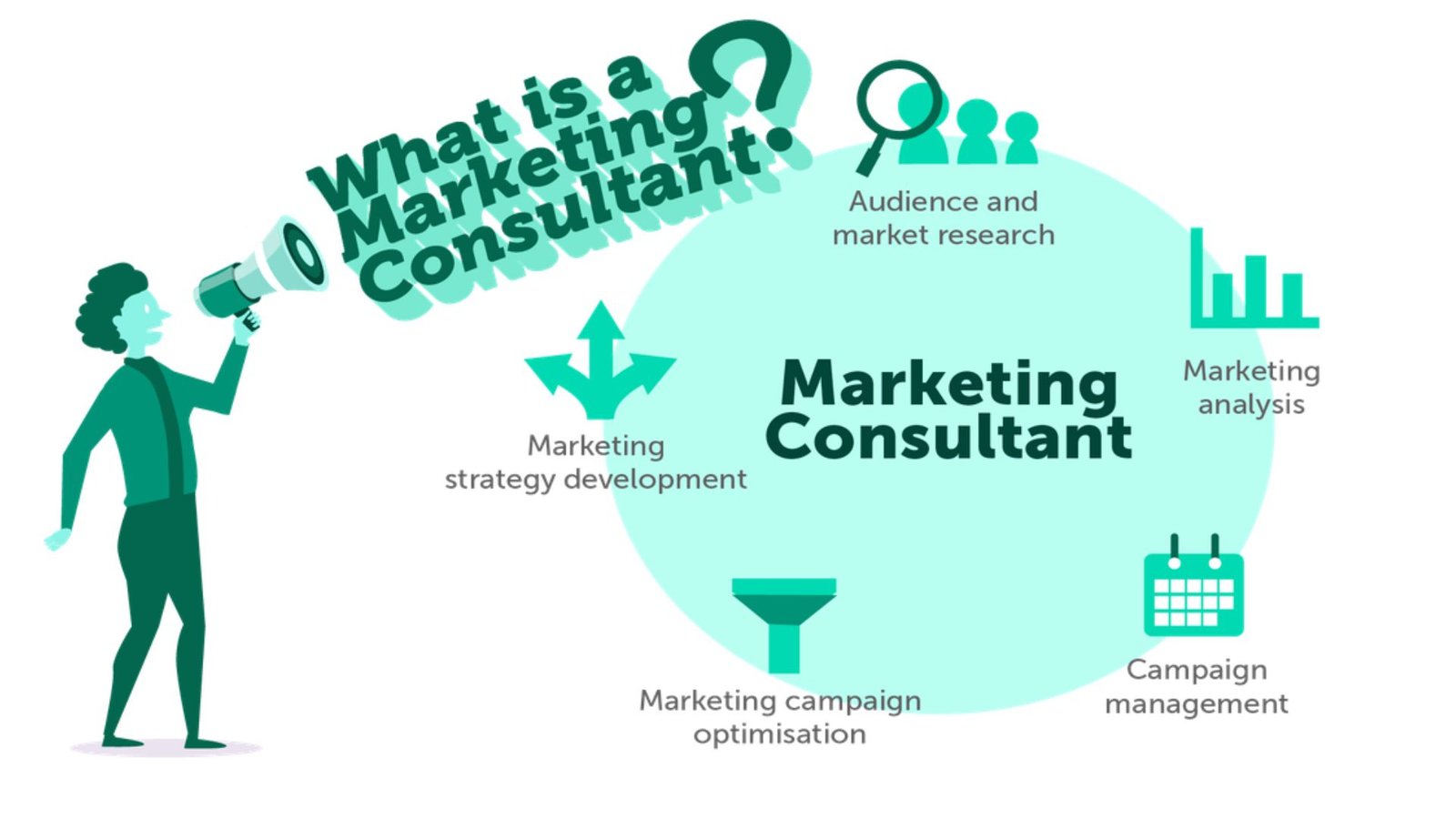
A marketing consultant helps businesses identify marketing problems, develop strategies, improve customer acquisition, and make better decisions about where to spend their marketing budget. Unlike someone hired only to manage advertising or social media, a consultant often looks at the wider picture, including positioning, customer behavior, competition, messaging, channels, performance, and business goals.
Companies may bring in outside marketing expertise when growth has slowed, a new product is launching, internal teams need strategic direction, or marketing activities are producing traffic without enough leads or sales.
Understanding what consultants actually do makes it easier to decide whether hiring one is worthwhile.
What Is a Marketing Consultant?
A marketing consultant is an independent specialist or advisory professional who evaluates a company’s marketing approach and recommends ways to improve performance.
The work can range from conducting market research and reviewing existing campaigns to developing an entire go-to-market strategy. Some consultants remain focused on strategy, while others help companies implement recommendations or coordinate specialists in areas such as SEO, paid advertising, content, email, and analytics.
The American Marketing Association describes marketing as involving activities and processes used to create, communicate, deliver, and exchange offerings that provide value. A consultant applies those principles to specific business challenges, often connecting customer needs with commercial objectives.
The role should not be confused with simply outsourcing routine marketing tasks. Good consulting begins with diagnosis before tactics.
What Does a Marketing Consultant Do?
The exact responsibilities depend on the client’s business, market, team, and objectives. A typical engagement may begin with an audit of existing marketing activities.
The consultant might examine:
- Customer segments and buyer behavior
- Brand positioning and messaging
- Website and conversion performance
- Search visibility and content
- Advertising campaigns
- Email and customer retention
- Competitor positioning
- Analytics and attribution
- Sales and marketing alignment
After identifying weaknesses and opportunities, the consultant develops recommendations based on priorities rather than trying every available channel.
For example, a business struggling to generate leads may assume it needs more advertising. An experienced consultant may discover that the real issue is unclear positioning, weak landing pages, poor audience targeting, or an ineffective follow-up process.
Modern consulting can also involve account-based marketing, audience segmentation, campaign measurement, demand generation, and data-driven optimization. These areas are increasingly connected to measurable pipeline and revenue outcomes.
Common Marketing Consulting Services
Businesses can hire consultants for a broad engagement or a specialized problem.
| Service | Typical Purpose | Useful When |
|---|---|---|
| Marketing strategy | Set priorities, audiences and channels | Marketing lacks clear direction |
| Market research | Understand customers and competitors | Entering or evaluating a market |
| Brand positioning | Clarify value and differentiation | Customers do not understand the offer |
| Digital marketing audit | Evaluate SEO, ads, content and website | Performance has stalled |
| Campaign strategy | Plan acquisition or launch activity | Promoting a product or service |
| Analytics review | Improve measurement and reporting | Results are difficult to attribute |
| Conversion strategy | Improve lead or sales performance | Traffic is high but conversions are low |
A marketing consultant may specialize in one discipline or work across several. Businesses should therefore match the consultant’s expertise to the problem they actually need to solve.
When Should a Business Hire One?
Outside expertise is particularly useful when a company understands that marketing needs improvement but does not know which changes should come first.
Hiring a consultant may make sense when:
- Marketing spending is increasing without proportional results.
- A company is launching into a new market.
- The internal team lacks specialist knowledge.
- Leadership needs an independent evaluation of existing strategy.
- Lead generation has become inconsistent.
- Different marketing channels are operating without coordination.
- The company needs a strategy before hiring a permanent marketing team.
Consultants can also provide temporary senior-level expertise without creating a permanent leadership position.
However, consulting is less useful when a company already has a strong strategy and simply needs someone to perform repetitive production work. In that situation, a freelancer, employee, or agency execution team may be more appropriate.
💡 Pro Tip
Before contacting a marketing consultant, define the business problem rather than requesting a specific tactic. Saying “we need more qualified sales opportunities from our existing traffic” gives an expert more room to diagnose the issue than simply saying “we need more social media posts.”
Marketing Consultant vs. Marketing Agency
The distinction varies between providers, but their typical roles are different.
A consultant usually focuses on analysis, strategy, recommendations, and specialist guidance. An agency commonly supplies a team that executes ongoing campaigns across services such as advertising, design, SEO, content, or social media.
Some consultants also provide implementation, while some agencies offer strategic consulting.
The better choice depends on the gap inside the business. If the company already has people capable of implementation but needs direction, consulting may be enough. If it requires continuous production and campaign management, an agency may be more suitable.
Companies sometimes use both: a consultant establishes strategy while internal staff or an agency handles execution.
How to Choose the Right Consultant
Avoid choosing someone based solely on an impressive portfolio or large social media following. Relevant expertise matters more.
Start by examining the types of problems the consultant has handled. Someone specializing in B2B software may use very different methods from a specialist working with local retailers or consumer brands.
Ask potential consultants how they diagnose problems before recommending tactics. A credible process should involve understanding customers, objectives, existing performance, resources, and competitive context.
You should also clarify:
- What deliverables will be provided?
- Who owns implementation?
- How will progress be measured?
- How often will reporting or strategy reviews occur?
- Which tools or account access will be required?
- What is outside the scope of the engagement?
Avoid vague promises of guaranteed rankings, instant revenue, or predictable results without enough information about your business.
How Much Does Marketing Consulting Cost?
There is no universal consulting fee. Pricing varies substantially according to specialization, market, reputation, project complexity, location, and the amount of implementation involved.
Common pricing structures include hourly consulting, fixed project fees, monthly retainers, and fractional leadership arrangements.
Instead of comparing quotes based only on cost, compare the scope of work. One proposal may include only strategic recommendations, while another includes research, reporting, workshops, campaign oversight, and implementation support.
A clear contract should explain deliverables, timelines, payment terms, communication expectations, and responsibilities on both sides.
📌 Key Takeaway
The most useful marketing consultant is not necessarily the person offering the largest number of services. Look for someone who can identify the actual business problem, establish priorities, explain their reasoning clearly, and connect marketing activities to measurable objectives.
Frequently Asked Questions
What qualifications should a marketing consultant have?
There is no single mandatory qualification. Relevant professional experience, strategic thinking, analytical ability, communication skills, and knowledge of the client’s market are important. Certifications or marketing degrees can support expertise, but businesses should also review the consultant’s process, previous work, specialization, and ability to explain how recommendations will be measured.
Can a marketing consultant help a small business?
Yes. Small businesses may use consultants to clarify positioning, select suitable marketing channels, audit existing campaigns, develop lead-generation strategies, or avoid spending limited budgets on poorly matched tactics. The engagement can often be limited to a specific project instead of requiring an ongoing contract.
What is the difference between a consultant and a marketing manager?
A marketing manager is usually an internal employee responsible for ongoing marketing operations and team coordination. A consultant typically works externally for a defined period or project, providing specialist advice, analysis, or strategic direction. Some consultants also work as fractional marketing leaders.
How long does a consulting engagement last?
Engagement length depends on the problem. A focused audit may require a short project, while positioning, market entry, or ongoing strategic support may involve several months. Businesses should define milestones and expected deliverables before work begins rather than choosing a duration without a clear scope.
Should a consultant also implement the strategy?
Not necessarily. Some consultants provide recommendations only, while others support execution. Before hiring, confirm whether implementation is included and who will manage advertising, content, design, analytics, or technical changes. Clear responsibility prevents a strong strategy from failing because nobody owns execution.
Making Consulting Work for Your Business
A marketing consultant can bring outside perspective, specialist expertise, and structure to marketing decisions, but the relationship works best when objectives and responsibilities are clear.
Start with the business problem, review the consultant’s relevant expertise, agree on measurable outcomes, and understand exactly what the engagement includes. The goal is not simply to add more marketing activity. It is to make better choices about customers, positioning, channels, resources, and measurement so marketing supports the wider goals of the business.
Conclusion
Choosing a marketing consultant should begin with a clear understanding of the problem your business needs to solve. The right professional can provide an outside perspective, identify gaps in your current strategy, and help prioritize the channels and activities most likely to support your goals.
Before hiring, review relevant experience, clarify the scope of work, discuss how results will be measured, and determine who will handle implementation. A skilled marketing consultant should bring more than ideas. Their recommendations should give your team a clearer direction, better use of resources, and a practical framework for making smarter marketing decisions over time.
