


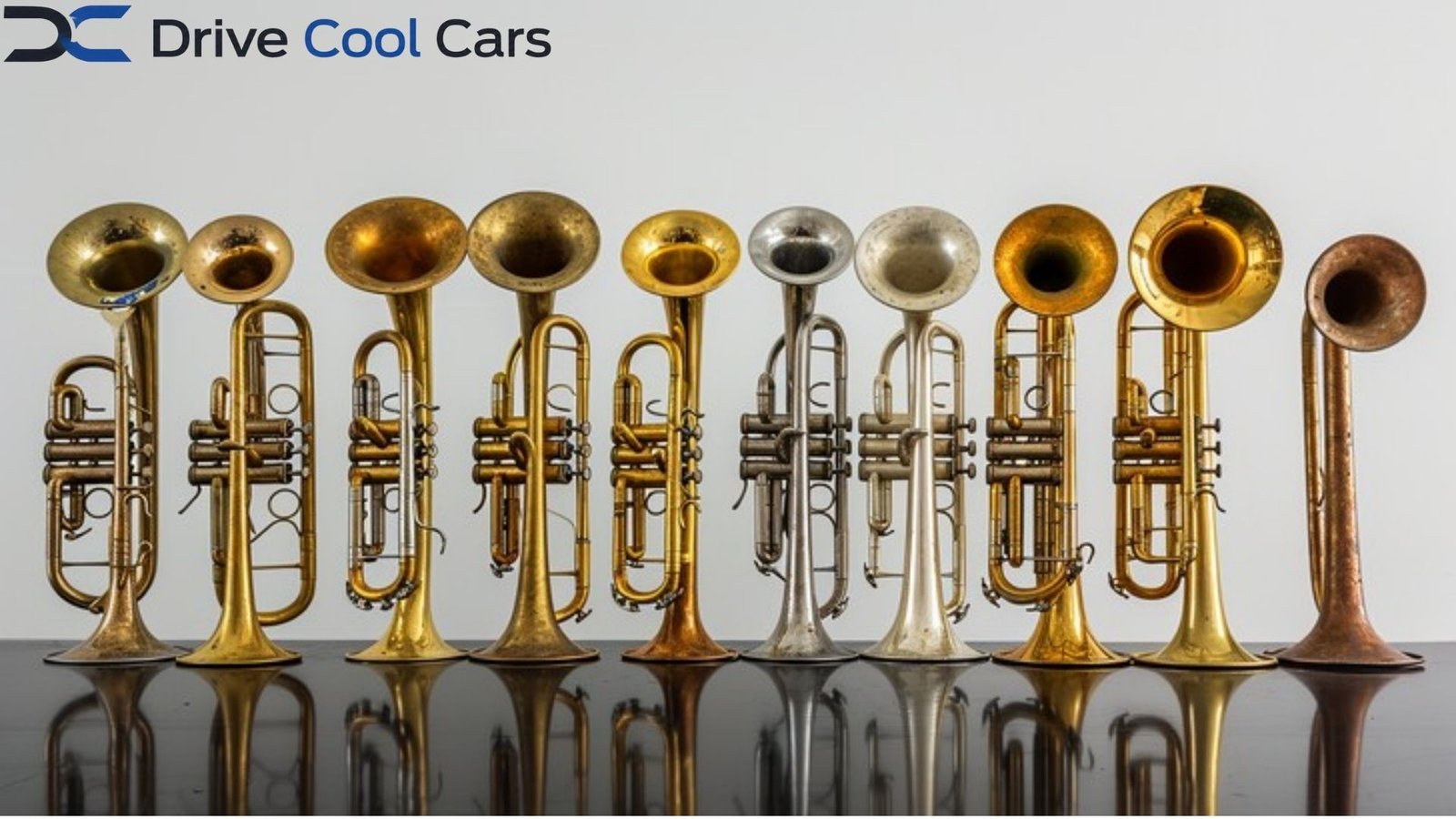
Choosing a brass instrument can feel surprisingly difficult when you are standing between a trumpet, trombone, French horn, euphonium, and tuba. They may all belong to the same family, but they do not feel the same to play. A beginner who struggles with one may find another immediately more comfortable.
If you are searching for the easiest brass instrument to learn, the answer depends on your age, physical comfort, musical goals, and how quickly you want to produce a pleasant sound. For many beginners, the euphonium is one of the most forgiving choices because its wider tubing and comfortable range make producing the first notes relatively approachable. The trombone can also be beginner-friendly, while the trumpet offers a smaller instrument with a huge amount of learning material but demands more control from the lips.
This guide explains how the main brass instruments differ, what actually makes one easier to learn, and which option makes the most sense for different beginners. It also covers mistakes that can make learning unnecessarily frustrating.
What Is a Brass Instrument?
A brass instrument produces sound when the player vibrates their lips into a mouthpiece. That vibration creates a buzzing sound, which travels through the instrument’s tubing and is amplified into a musical tone.
Common brass instruments include:
- Trumpet
- Trombone
- French horn
- Euphonium
- Tuba
- Cornet
- Baritone horn
Despite their different shapes and sizes, they share the same basic principle:
your lips create the vibration, while the instrument shapes and amplifies it.
This is important for beginners because learning a brass instrument is not simply about pressing keys or moving a slide. Developing a consistent embouchure—the way your lips, facial muscles, and mouth interact with the mouthpiece—is a major part of the learning process.
What Is the Easiest Brass Instrument to Learn?
For many beginners, the euphonium is among the easiest brass instruments to start with.
Its relatively large mouthpiece and broad tubing can make the first few notes feel less demanding than those of smaller, higher-pitched instruments. Its tone is also naturally warm and mellow, so beginners do not always have to fight for a bright, focused sound.
However, “easiest” does not mean effortless.
A beginner still needs to learn:
- Proper breathing
- Lip control
- Tonguing
- Finger coordination
- Rhythm and timing
- Pitch accuracy
- Consistent practice habits
The best instrument is ultimately the one you enjoy enough to practice regularly.
Euphonium vs. Trumpet for Beginners
The trumpet is probably the brass instrument most people immediately recognize. It is compact, relatively lightweight, and common in school bands, jazz groups, marching bands, and orchestras.
But its small mouthpiece and higher register can make the beginning stages challenging.
The euphonium works differently from a beginner’s perspective. Its lower register and broader tubing often make it easier to produce a stable tone without immediately demanding extreme lip control.
Choose the euphonium if you want:
- A warm, rounded sound
- A comfortable lower-to-middle register
- An instrument that feels physically substantial
- A relatively forgiving starting experience
- A strong role in concert and brass ensembles
Choose the trumpet if you want:
- A compact instrument
- A bright, energetic sound
- Jazz or marching-band opportunities
- A versatile instrument for many musical styles
- A challenge involving higher notes and precise articulation
One useful insight is that the instrument that is easiest to produce a first note on is not necessarily the easiest to master. A euphonium may feel comfortable during the first few weeks, while trumpet players eventually benefit from developing very precise control over pitch, airflow, and embouchure.
Is Trombone Easy to Learn?
The trombone can be an excellent beginner brass instrument, especially for people who enjoy learning through physical movement.
Instead of valves, the standard trombone uses a slide. Moving the slide changes the length of the tubing and therefore changes the pitch.
That makes the learning experience quite different from playing trumpet, euphonium, or tuba.
The major advantage is that the slide provides a very direct connection between movement and pitch. The major challenge is that there are no physical markings for every note. Players must learn approximately where each position belongs and then adjust using their ears.
For a beginner, this creates an interesting trade-off:
Trombone can be easy to understand but difficult to play perfectly in tune.
If you have a good ear and enjoy experimenting with pitch, you may find the trombone extremely rewarding.
What About the Baritone?
The baritone horn is another strong choice for beginners.
It has a relatively similar playing concept to the euphonium because it uses valves and produces a lower-pitched sound than the trumpet. The main difference is generally in the instrument’s size, bore, and role within an ensemble.
For a young student, the baritone can provide a comfortable introduction to brass playing without immediately pushing them toward the higher register.
A practical consideration is transportation. A larger brass instrument can be inconvenient to carry, particularly for students who travel to school or rehearsals by public transportation.
So before choosing an instrument, consider not only “Can I play it?” but also “Can I realistically carry, store, clean, and practice it?”
That second question is often overlooked.
Is Trumpet a Good First Brass Instrument?
Yes. The trumpet is one of the most popular choices for beginners, and there is a good reason for that.
It is relatively portable and has a prominent role in many types of music. A student can encounter trumpet parts in concert bands, marching bands, jazz ensembles, orchestras, popular music, and smaller groups.
The challenge is that producing a beautiful trumpet tone takes time.
Beginners often make the mistake of trying to force higher notes by pressing their lips harder or increasing air pressure dramatically. This can create fatigue and an unstable tone.
A better approach is to concentrate on:
- Relaxed but controlled airflow
- Efficient lip vibration
- Good posture
- Gentle articulation
- Gradual range development
Trying to “muscle” your way into high notes is one of the fastest ways to make trumpet practice uncomfortable.
Where Does the French Horn Fit?
The French horn is beautiful, expressive, and capable of an enormous range of colors. It is also generally not the instrument I would recommend if your only goal is to find the easiest possible brass instrument.
Why?
Pitch can be particularly sensitive, and the player’s hand position and embouchure have a significant effect on the instrument’s response. Notes can feel close together, meaning beginners need a reasonably developed ear and careful control.
That does not make French horn a bad beginner instrument.
It simply means that difficulty should be considered relative to the player’s goals.
Someone who loves the horn’s sound may progress faster on it than someone who chooses an “easy” instrument they dislike.
Is Tuba Too Difficult for Beginners?
The tuba looks intimidating because of its size, but physical size does not automatically equal playing difficulty.
Its low pitch means beginners are not normally expected to produce the extremely high notes associated with trumpet playing. The large mouthpiece can also feel comfortable for some players.
The real challenges are practical.
A tuba can be heavy, expensive, and difficult for a young student to transport. Breath management is also important because the instrument contains a large amount of tubing.
For a physically capable student who loves low brass, however, the tuba can be an excellent starting point.
One uncommon but useful observation is that a student’s body size should influence instrument choice, but it should not completely determine it. A smaller student may be perfectly capable of playing a tuba with the appropriate instrument size and support.
Brass Instruments Ranked for Beginners
There is no universal ranking, but a reasonable starting comparison looks like this:
| Instrument | Beginner Difficulty | Main Challenge | Best For |
|---|---|---|---|
| Euphonium | Easy–Moderate | Breath and finger control | Warm, comfortable playing |
| Baritone | Easy–Moderate | Breath and articulation | School and concert bands |
| Trombone | Moderate | Slide accuracy and intonation | Players with good ears |
| Trumpet | Moderate | Embouchure and high register | Versatile, energetic styles |
| Tuba | Moderate | Size and air management | Low-register enthusiasts |
| French horn | Challenging | Pitch accuracy and control | Expressive, advanced playing |
These categories are not fixed rules. A person’s natural hearing, lip shape, breathing habits, and musical interests can change the experience considerably.
How Long Does It Take to Learn a Brass Instrument?
Most beginners can produce their first recognizable sounds relatively quickly with proper instruction. Becoming genuinely comfortable is another matter.
With consistent practice, a beginner may experience noticeable progress over several months.
A realistic progression might look like:
First few weeks:
Learning how to hold the instrument, form the embouchure, breathe correctly, and produce basic sounds.
First few months:
Playing simple melodies, developing rhythm, learning scales, and improving tone.
Six months to a year:
Greater control, better endurance, more accurate pitch, and increasingly complex music.
Several years:
Advanced range, refined tone, musical expression, improvisation, and professional-level technique become possible.
The important factor is not practicing for hours once a week.
Short, focused sessions performed consistently usually produce better results.
For a beginner, 15–30 minutes of thoughtful practice can be more productive than an unfocused two-hour session.
Common Beginner Mistakes
1. Using Too Much Pressure
Beginners sometimes press the mouthpiece aggressively against their lips because they believe pressure creates stronger notes.
It usually creates fatigue instead.
2. Ignoring Breathing
Brass players need controlled airflow. If your breathing is shallow or inconsistent, your tone and endurance will suffer regardless of which instrument you choose.
3. Practicing Only What Feels Easy
Playing familiar notes repeatedly feels productive, but improvement requires gradually working on uncomfortable areas such as articulation, scales, long tones, and transitions.
4. Chasing High Notes Too Soon
Range develops gradually. Forcing high notes before developing a stable foundation can encourage poor technique.
5. Neglecting Maintenance
A brass instrument needs regular cleaning and maintenance. Sticky valves, a poorly lubricated slide, or accumulated moisture can make an instrument feel much harder to play than it actually is.
This leads to an easily overlooked lesson:
sometimes the “difficulty” is coming from the instrument’s condition, not the player’s ability.
How to Choose the Right Brass Instrument
Instead of asking only which brass instrument is easiest, ask five practical questions.
What sound do you love?
If you love bright and powerful sounds, trumpet may keep you motivated. If you prefer rich and mellow tones, euphonium or baritone may be a better match.
What music do you want to play?
Jazz, marching band, orchestral music, concert band, and brass ensembles use instruments differently.
Can you comfortably handle the instrument?
Consider weight, size, transportation, and storage before making a decision.
How much practice time do you have?
A demanding instrument becomes much more frustrating when you have very limited practice time.
Can you get proper instruction?
A teacher can correct embouchure and breathing problems before they become habits. This can make a bigger difference than choosing between two supposedly “easy” instruments.
Three Overlooked Factors That Can Make Learning Easier
Your natural hearing matters
A player with strong pitch recognition may find trombone easier than someone who struggles to identify whether a note is sharp or flat. Because trombone positions are not mechanically locked to exact pitches, listening ability matters enormously.
Mouthpiece comfort can change your experience
Two instruments from the same family can feel completely different around the lips. A mouthpiece that feels natural may allow a beginner to concentrate on music instead of constantly thinking about physical discomfort.
The best beginner instrument may be the one available locally
This sounds unexciting, but it matters. If your school already has quality euphoniums and an experienced teacher for low brass, choosing a euphonium may be more practical than purchasing a trumpet simply because it is more popular.
Access to instruction, repairs, practice space, and ensemble opportunities can have a greater effect on progress than small differences in theoretical difficulty.
Frequently Asked Questions
What is the easiest brass instrument to learn?
The euphonium is often considered one of the easiest brass instruments for beginners because its broad tubing, comfortable register, and relatively forgiving response can make producing a stable tone easier. The baritone is also a strong beginner option. However, individual comfort and musical interests can change which instrument feels easiest.
Is trumpet harder to learn than euphonium?
For many beginners, trumpet can be more demanding initially because of its smaller mouthpiece, higher register, and precise embouchure requirements. Euphonium generally offers a broader, lower register that can feel more comfortable at the beginning. Neither is inherently easy to master.
Can a child learn a brass instrument?
Yes, children can learn brass instruments, but the best choice depends on their physical development, comfort, motivation, and available instruction. Smaller or lighter instruments may be easier for some young students to handle. A qualified teacher can help determine whether the child’s chosen instrument is appropriate.
Is trombone a good first brass instrument?
Absolutely. Trombone can be an excellent first instrument for a beginner who enjoys its sound and is comfortable learning slide positions. The main challenge is developing accurate intonation because the slide does not automatically place every note in tune. Regular listening and practice are especially important.
How long does it take to get good at a brass instrument?
A beginner can learn basic notes and simple melodies within the first few months with consistent practice and good instruction. Developing a strong tone, reliable range, accurate pitch, and musical confidence takes considerably longer. Progress depends more on regular, focused practice than on a specific number of months.
Final Thoughts
There is no single brass instrument that is easiest for every person. For many beginners, the euphonium or baritone provides a comfortable starting point, while trombone is attractive to players who enjoy working with pitch and movement. Trumpet is highly versatile but requires patience with embouchure and range, while French horn typically demands more precise pitch control.
The smartest choice is therefore not simply to pick the instrument with the reputation for being easiest. Think about the sound you enjoy, the music you want to play, your physical comfort, access to instruction, and how realistically you can practice.
A beginner who genuinely enjoys their instrument is far more likely to practice consistently—and consistency is ultimately what turns a first awkward note into confident musicianship.
